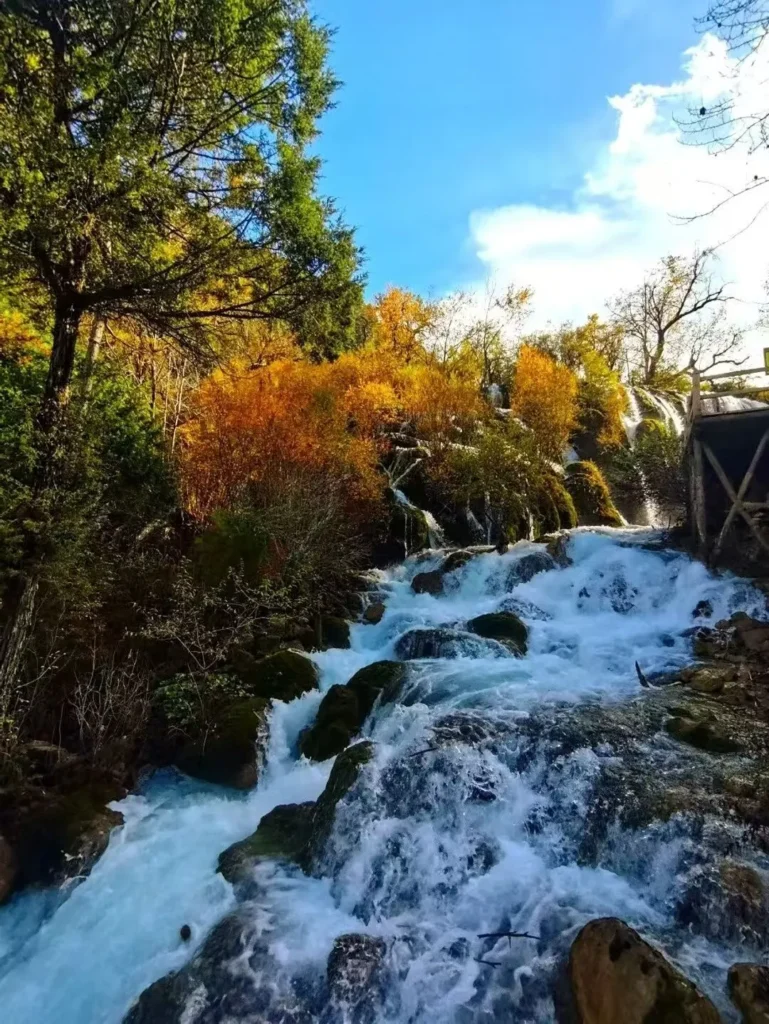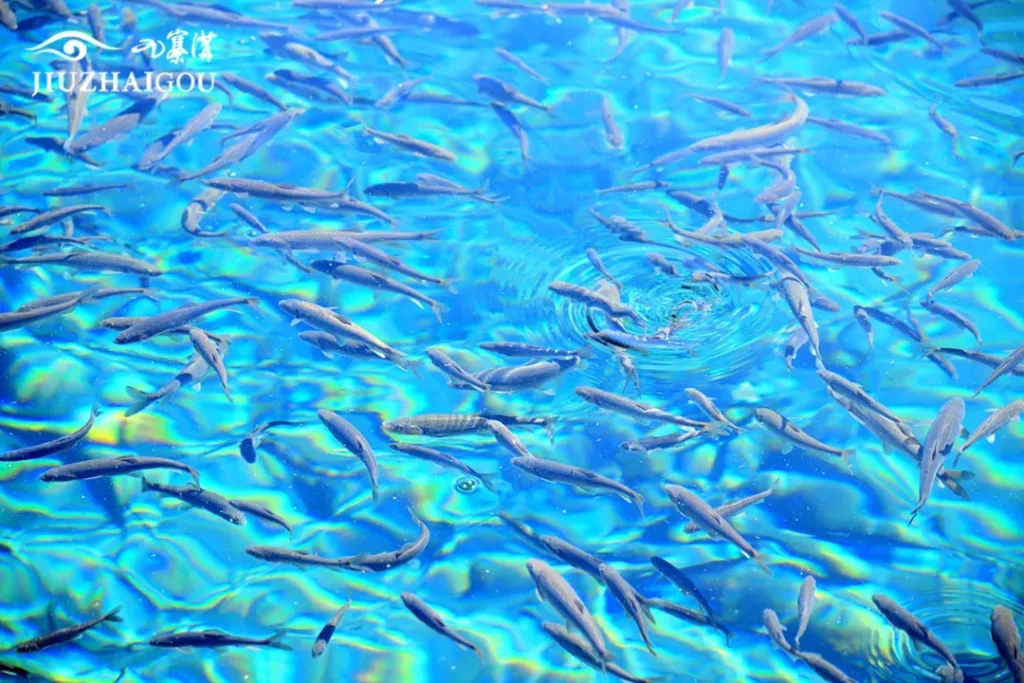
World-famous Jiuzhaigou sits in Jiuzhaigou County (formerly Nanping County), Aba Tibetan and Qiang Autonomous Prefecture, Sichuan Province. Its name means “Valley of Nine Villages”, after nine historic Tibetan hamlets: Heye, Panya, Yala, Jianpan, Heiguo, Shuzheng, Zechawagou, Rexi and Guodu.
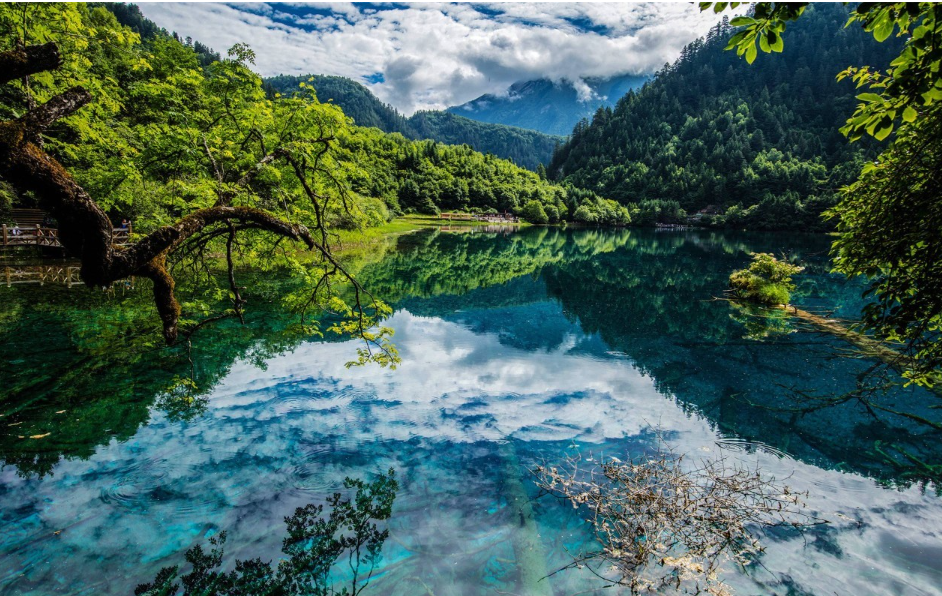
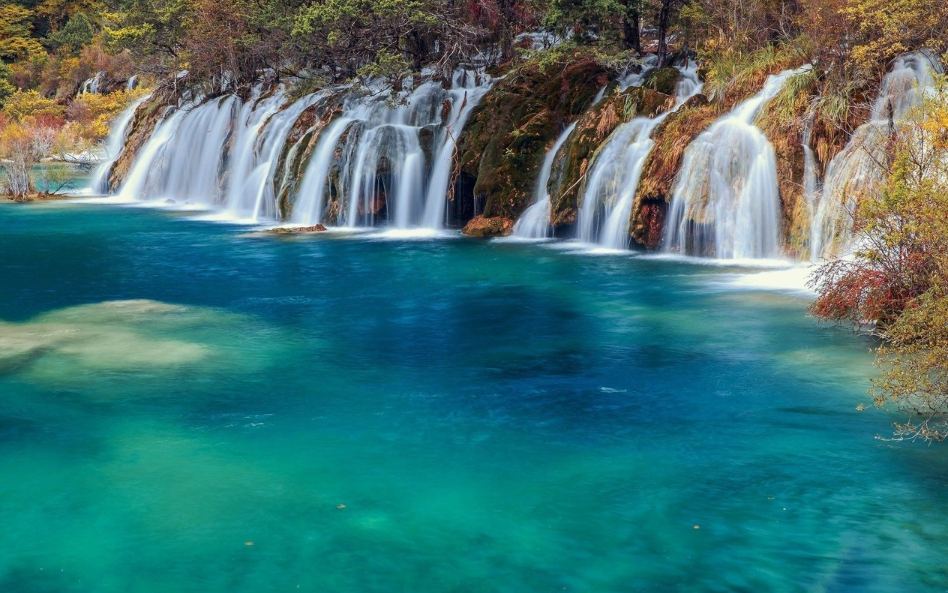
Spread across three main valleys — Shuzheng, Rizhe and Zechawagou — are 114 lakes. Formed by calcium carbonate deposits in steep mountain terrain, this landscape is celebrated for its six signature wonders: emerald lakes, cascading waterfalls, colourful autumn forests, snow-capped peaks, rich Tibetan culture and striking blue winter ice.
Unlike many well-known scenic spots in China, Jiuzhaigou remained hidden deep in the mountains for centuries. Until the mid-20th century, only narrow mountain trails linked it to the outside world. Local Tibetans lived a self-sufficient life here for generations. In their cosmology, snow mountains were divine male and female spirits; the lakes were basins where goddesses groomed themselves; and forests covering the slopes were the goddesses’ long hair. This deep reverence for nature safeguarded the ecosystem, making the valley a home for giant pandas and many rare birds and animals.
The long, winding story of its discovery by the outside world
The first large official group to enter Jiuzhaigou arrived in 1966: loggers from the forestry bureau. Their mission was not conservation, but timber harvesting. The valley’s lakes and waterfalls, its defining features, depend entirely on forests to hold and regulate water. Fortunately, logging technology at the time was limited. The landscape was damaged, yet not destroyed overnight.
In 1975, an investigation team from the Ministry of Agriculture, Animal Husbandry and Fishery carried out a comprehensive survey. They concluded that Jiuzhaigou held exceptionally rich flora and fauna and ranked among the world’s most breathtaking natural sites. That same year, Wu Zhonglun, a leading forest scientist and president of the Chinese Academy of Forestry, toured the valley. Stunned by what he saw, he remarked: “I have visited many countries across Europe and America, yet I have never encountered scenery this extraordinary.” He immediately wrote to the Sichuan provincial government and forestry department, urging urgent protection. The forestry bureau quickly issued an order: logging would only be permitted more than 200 metres away from the riverbanks along the Zechawagou and Rizhe valleys. Limited as this rule was, it marked the forestry authority’s first step to protect Jiuzhaigou.
On 16 August 1976, a magnitude‑7.2 earthquake struck Songpan. Cai Wenbin, Deputy Director of the Sichuan Revolutionary Committee, was appointed frontline disaster relief commander. That night, he set off with 500 military trucks, 2,000 soldiers and nearly a thousand medical workers, rushing to the quake zone. After more than 20 days of round‑the‑clock rescue work, the core relief mission wrapped up on 8 September. Leaders of Nanping County invited Cai and his team to visit Jiuzhaigou: a valley of nine hamlets dotted with more than 40 terraced lakes, with fresh air, blooming wildflowers and crystal‑clear, multicoloured water.
Cai arranged two days of rest and sightseeing for the relief team. He was instantly captivated by the fairy‑like landscape. He asked journalists from Emei Film Studio and Sichuan TV travelling with him to film the valley’s major sights. On 9 September, an urgent call recalled him to Chengdu for national mourning after Mao Zedong’s death. Once the mourning period ended in late September, Cai reported Jiuzhaigou’s beauty to the Sichuan Party leadership. The provincial secretary approved a formal proposal to the National Tourism Administration to develop the valley for tourism. In 1977, Han Kehua, Director of the National Tourism Administration, led an inspection tour, and Jiuzhaigou was formally designated a national tourism development project.
In August 1978, the Institute of Biology, Chengdu Branch of the Chinese Academy of Sciences, submitted a report proposing the creation of a nature reserve at Jiuzhaigou. The Sichuan Party Committee then instructed the provincial forestry bureau and the institute to draw up detailed plans for this and other new reserves.
On 30 November 1978, logging inside Jiuzhaigou was banned. On 15 December 1978, the State Council endorsed a national forestry report on giant panda conservation and officially approved the Jiuzhaigou National Nature Reserve.
The ban inside the valley did not stop logging in surrounding areas, because forestry teams still had mandatory timber quotas to fulfil. At the end of 1978, Xinhua News Agency reporter He Xiaolin wrote an internal appeal calling for stronger protection. Provincial leaders issued instructions based on the report, and the two forest stations operating near Jiuzhaigou finally withdrew in 1979.
The Jiuzhaigou Nature Reserve Administration was set up in 1980. In 1982, Hu Jiwei, Editor‑in‑Chief of People’s Daily, attended a historical symposium in Sichuan. Vice Governor He Haoju told him Jiuzhaigou was China’s most magical natural treasure. Hu travelled two days by road to see it for himself. Back in Beijing, he pushed to turn Jiuzhaigou into an official tourist destination. Later that year, the State Council named it a National Scenic Area. Jiuzhaigou opened to visitors in 1984.
In 1991, China submitted an application to UNESCO to inscribe Jiuzhaigou on the World Natural Heritage List. The application was approved at the end of 1992.