I remember standing in a Chengdu teahouse, watching an old man practice tai chi while steam rose from my bowl of mapo tofu. The numbness from Sichuan peppercorns was spreading across my tongue. Three days later, I was standing at a mountain lake in Jiuzhaigou so blue it looked photoshopped, breathing air so clean it felt like my first real breath in years.
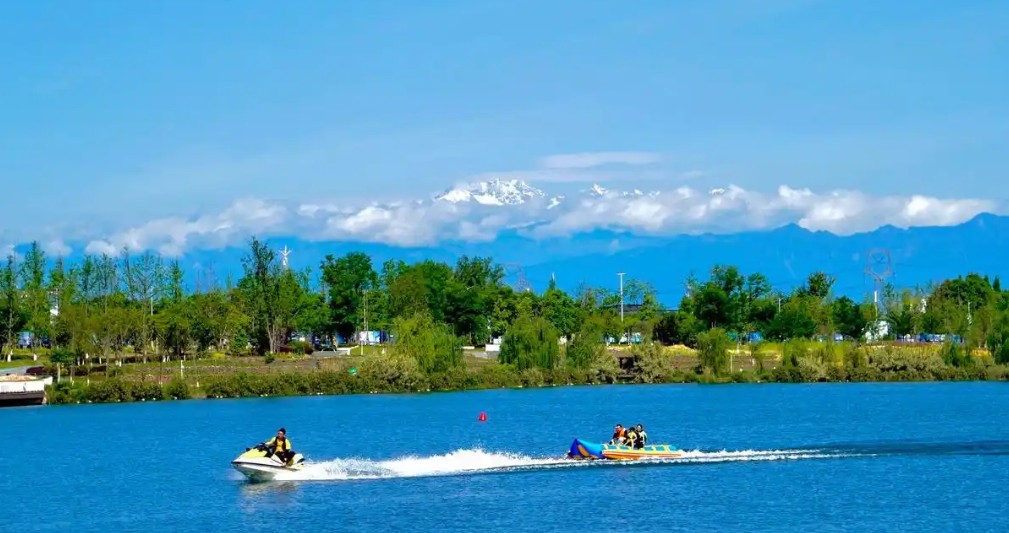
That’s the thing about Sichuan province. It doesn’t do things halfway.
Most travelers pick one lane. Culture OR nature. Food OR scenery. Urban OR wilderness. But if you’re flying all the way from America to China, you owe yourself the full experience. And the full experience of Sichuan has exactly two stops: Chengdu and Jiuzhaigou.
One will feed your soul. The other will feed everything else.
Why These Two? The Math Is Simple
I’ve been to 47 countries. I know what overtourism looks like. I know when a place has sold its soul to Instagram.
Chengdu and Jiuzhaigou haven’t. Not completely.
Chengdu is China’s fourth-largest city, but it moves at its own pace. While Shanghai and Beijing chase Wall Street hours, Chengdu still closes shops for afternoon mahjong. The pandas aren’t a gimmick here—they’re neighbors. The food isn’t fusion—it’s 2,000 years of culinary evolution that decided spicy feels good.
Jiuzhaigou is different. It’s a UNESCO World Heritage site that looks like someone took every mountain lake photo you’ve ever seen and said “hold my beer.” Waterfalls that drop 300 meters. Lakes so clear you can count fish at 20 feet deep. Forests that change color with the seasons like a living screensaver.
But here’s what nobody tells you: doing both in one trip is easier than you think. And cheaper.
The Money Talk: What This Actually Costs
Let’s talk numbers. Because every travel blog dances around this, and you deserve better.
Flights: Round-trip from LAX or SFO to Chengdu runs $800-1,400 depending on season. Book 3-4 months out. Summer and fall (September-October for Jiuzhaigou colors) are peak. Winter is 40% cheaper but you’ll deal with snow.
Visa: American passport holders need a Chinese tourist visa. Current cost: $140-180 depending on processing speed. You can apply at Chinese Visa Application Service Centers in major US cities. Processing takes 4-7 business days. Pro tip: the 144-hour visa-free transit works if you’re connecting through Chengdu to a third country—but for a proper 2-week trip, just get the visa.
Chengdu Accommodation: I stayed at a boutique hotel near Chunxi Road for $65/night. You can find decent 4-star hotels for $50-80. Hostels run $15-25. Budget $500-700 for 7 nights mid-range.
Jiuzhaigou Accommodation: Stay in Zhangzha town (the gateway). Hotels run $40-100/night. I paid $55 for a clean room with mountain views. Budget $300-400 for 5 nights.
Food: Street food and local restaurants: $5-15 per meal. Nice dinner: $20-30 per person. Hot pot (must-do): $25-40 per person for the full experience. Budget $300-400 for 2 weeks if you eat like a local.
Attractions:
– Chengdu Panda Base: 55 RMB (~$8)
– Jiuzhaigou entrance + shuttle bus: 280 RMB (~$40) in peak season, 170 RMB in off-season
– Huanglong (nearby): 200 RMB (~$28)
Local Transport: Metro in Chengdu: $0.50-2 per ride. Taxi/Didi: $3-10 for most trips. Chengdu to Jiuzhaigou: bus $35, domestic flight $80-150.
Total Budget (excluding international flights): $2,000-2,800 for 14 days mid-range. Can do it for $1,500 if you’re careful. Can easily spend $4,000+ if you want luxury.
The Stuff Nobody Tells You (But You Need to Know)
Internet: Yes, It’s Blocked. Here’s the Fix.
Google. Facebook. WhatsApp. Instagram. YouTube. None of them work in China without help.
Your options:
eSIM: I used Airalo’s China eSIM ($17 for 3GB/15 days). It routes through Hong Kong, so everything works. Download the app before you leave. Install the eSIM before you land. Works flawlessly.
VPN: ExpressVPN and NordVPN still work inconsistently. Download and test before you go. Have a backup.
Local SIM: China Mobile/Unicom at the airport. Cheap ($15-20 for decent data) but requires passport registration and doesn’t bypass the firewall.
My advice: Get an eSIM before you leave. Keep your US number for 2FA. Done.
Bathrooms: The Squat Toilet Situation
Yes, squat toilets exist. No, you don’t have to use them exclusively.
Chengdu hotels, malls, and restaurants have Western sit toilets. Jiuzhaigou visitor centers have them too. The older local restaurants and public facilities? Often squat.
Bring flip-flops for public bathrooms. Trust me on this.
Also: toilet paper isn’t always provided in public restrooms. Carry a small pack. Always.
Altitude Sickness: Jiuzhaigou Is High
Jiuzhaigou sits at 2,000-3,100 meters (6,500-10,000 feet). You’ll notice it.
Symptoms: headache, nausea, trouble sleeping, shortness of breath.
Prevention:
– Spend 2-3 days in Chengdu (500m elevation) first to acclimatize
– Take it easy the first day in Jiuzhaigou
– Drink water. Lots of it.
– Avoid alcohol the first 48 hours
Medication:
– Diamox (acetazolamide): prescription required, start 24 hours before ascending
– Ibuprofen for headaches
– Some travelers use Rhodiola (红景天), a Chinese herb—evidence is mixed but locals swear by it
I’m not a doctor. Talk to yours before you go, especially if you have heart or lung conditions.
Time Zone: It’s Simpler Than You Think
China uses one time zone: Beijing Time (UTC+8). Chengdu is geographically in a different zone but uses Beijing Time anyway.
US time differences:
– East Coast (EST): 13 hours ahead
– West Coast (PST): 16 hours ahead
Jet lag is real. Plan your first 2 days light. No ambitious hikes. No 6 AM starts. Let your body catch up.
Tipping: Don’t
Tipping isn’t part of Chinese culture. It can actually create confusion.
Exception: high-end hotels and tour guides appreciate it, but it’s not expected.
The 14-Day Itinerary That Actually Works
Days 1-3: Chengdu Arrival & Recovery
Day 1: Land, check in, fight jet lag. Walk around Chunxi Road. Eat something simple. Sleep early.
Day 2: Chengdu Panda Base. Go at 8 AM when pandas are active. Budget 3-4 hours. Afternoon: People’s Park teahouse. Watch locals. Try ear cleaning (yes, it’s a thing).
Day 3: Jinli Ancient Street. Wuhou Shrine. Hot pot dinner. I recommend Shu Daxia or any place with locals, not tourists.
Days 4-5: Chengdu Deep Dive
Day 4: Dujiangyan Irrigation System (2,300 years old, still working). Combine with Mount Qingcheng (Taoist mountain). Full day trip.
Day 5: Sichuan Museum. Wide and Narrow Alleys. Last Chengdu dinner. Pack for mountains.
Days 6-10: Jiuzhaigou
Day 6: Fly or bus to Jiuzhaigou. Fly is 1 hour ($80-150), bus is 8 hours ($35). Check in, rest, light walk.
Day 7-8: Jiuzhaigou Valley. Two full days minimum. The park is massive. Day 1: lower sections. Day 2: upper sections. Stay inside the park if budget allows (expensive but worth it for sunrise).
Day 9: Huanglong National Park. Famous for terraced calcium pools. 4-5 hours. Return to Zhangzha.
Day 10: Buffer day. Weather in mountains is unpredictable. Use for extra hiking or return to Chengdu.
Days 11-14: Chengdu Return & Departure
Day 11-12: Back to Chengdu. Shopping. Last-minute souvenirs. Tea ceremony.
Day 13: Whatever you missed. Food tour. Massage.
Day 14: Airport. Fly home.
Packing List: What I Wish I’d Brought
Essentials:
– Power adapter (China uses Type A/C/I, 220V)
– Portable charger (you’ll use your phone constantly)
– Flip-flops (public bathrooms)
– Toilet paper (small pack, always)
– Hand sanitizer
– Medications (prescription + pain relievers + stomach meds)
– Layers (mountains are cold even in summer)
– Rain jacket (afternoon showers are common)
– Comfortable hiking shoes
– Sunscreen and sunglasses (high altitude = strong UV)
Download Before You Go:
– Google Maps (download offline maps—doesn’t work in China but offline does)
– Pleco (Chinese dictionary)
– WeChat (everyone uses it, even for payments)
– Alipay (link your credit card)
– Translation app (Google Translate with offline Chinese)
– Airalo app (for eSIM)
Money:
– Notify your bank before travel
– Bring some cash (USD to exchange, or use ATMs)
– Credit cards work in hotels and nice restaurants
– WeChat Pay and Alipay work everywhere else (set up before you go)
The Real Question: Should You Go?
Here’s what I’ll tell you that other travel bloggers won’t:
China is not easy. The language barrier is real. The internet situation is annoying. The culture shock is real, especially around food and bathrooms.
But here’s the thing: that’s exactly why you should go.
Every destination is becoming the same. Starbucks on every corner. Instagram spots curated for photos, not experiences. English menus. Credit cards everywhere.
Chengdu and Jiuzhaigou are different. You’ll struggle sometimes. You’ll order the wrong dish and sweat through your shirt. You’ll point at pictures because you don’t know the words. You’ll miss Google Maps.
And you’ll have the time of your life.
The pandas will look you in the eye like they’re evaluating your life choices. The mapo tofu will rewrite your understanding of what food can do. The lakes in Jiuzhaigou will make you question whether reality is real.
You’ll come back different.
Final Word: Just Go
I’ve written thousands of words here. Given you budgets, itineraries, packing lists, warnings.
But here’s the truth: you can’t prepare for everything. And that’s okay.
Book the flights. Get the visa. Download the eSIM. Pack the flip-flops.
Then go.
The pandas aren’t going anywhere. The mountains aren’t closing. But you’re not getting younger. And the world is waiting.
Chengdu will teach you to slow down. Jiuzhaigou will remind you why nature matters. Together, they’ll show you what travel used to be before everything became content.
Your future self will thank you for the courage to go.