
At 9:19 PM on August 8, 2017, a 7.0-magnitude earthquake struck Jiuzhaigou.
Sparkling Lake dried up. Nuorilang Waterfall collapsed. The scenic area closed.
Everyone thought this fairyland on earth was “destroyed.”
Two years later, I stood in front of the restored Nuorilang Waterfall, its thunderous roar ringing in my ears. Sunlight pierced the mist, and a rainbow hung right before my eyes. A young American man next to me held up his camera, muttering: “This is insane. Absolutely insane.”
He asked me: “So where exactly is this place?”
In that moment, I realized: Jiuzhaigou is world-famous, yet most Americans have no idea where it is.
So today, I’m answering this simple question — one with a far bigger story behind it:
Which province, city and county is Jiuzhaigou located in?
The answer: Jiuzhaigou County, Aba Tibetan and Qiang Autonomous Prefecture, Sichuan Province.
But those three place names are just the start. The real story is about water that cannot be destroyed.
First, the Location — Then Why It’s Worth the Trip
Jiuzhaigou is NOT in Chengdu or Chongqing — two of the most common misunderstandings.
It lies in the northernmost part of Sichuan Province, within the Aba Tibetan and Qiang Autonomous Prefecture, specifically in Jiuzhaigou County.
From Chengdu, you travel 330 kilometers north, over winding mountain roads, to reach this place where God seems to have spilled his paintbox.
Why Americans Should Know Jiuzhaigou
Think of it as a water-focused version of Yellowstone — but with more vivid colors and more concentrated scenery.
- Yellowstone has geysers; Jiuzhaigou has 108 colored lakes.
- Yellowstone has the Grand Canyon; Jiuzhaigou has China’s widest waterfall, Nuorilang (270m wide, 24.5m tall).
- Yellowstone has wildlife; Jiuzhaigou protects 2,567 square kilometers of primeval forest.
The difference? Jiuzhaigou’s water is a blue you will never forget.
Why so blue? The lakes are rich in calcium carbonate minerals, which refract sunlight into brilliant turquoise and blue. These travertine formations take hundreds of years to form — nature’s slowest, most beautiful masterpiece.
- The blue of Five-Flower Lake is like a gemstone.
- The blue of Long Lake is like a deep abyss.
- The blue of Mirror Lake is like the sky fallen into the water.
An American traveler wrote in his journal: “I’ve seen lakes in Canada, in Switzerland, in Patagonia. None of them prepared me for this.”
Exact Location: Three Levels of Geography
Level 1: Sichuan Province
Sichuan is a province in southwestern China.
It’s the home of giant pandas and the birthplace of Sichuan hot pot.
Jiuzhaigou sits at the northern tip of Sichuan, near the border with Gansu Province.
Level 2: Aba Tibetan and Qiang Autonomous Prefecture
This is an autonomous prefecture — similar to a large county — sparsely populated and high in altitude.
It’s home to the Tibetan and Qiang ethnic groups. Walking through Jiuzhaigou’s streets, you’ll see white Tibetan pagodas and hear Qiang folk songs.
Level 3: Jiuzhaigou County
The scenic area’s coordinates: 33°15′ N, 103°55′ E.
This spot lies exactly on the transition zone between the Qinghai‑Tibet Plateau and the Sichuan Basin. That means you see both plateau snow-capped mountains and basin forests — all in one place.
The 2017 Earthquake: The Rebirth of a Lake
Let’s go back to that night.
When the earthquake hit on August 8, 2017, 38,000 visitors were inside the scenic area.
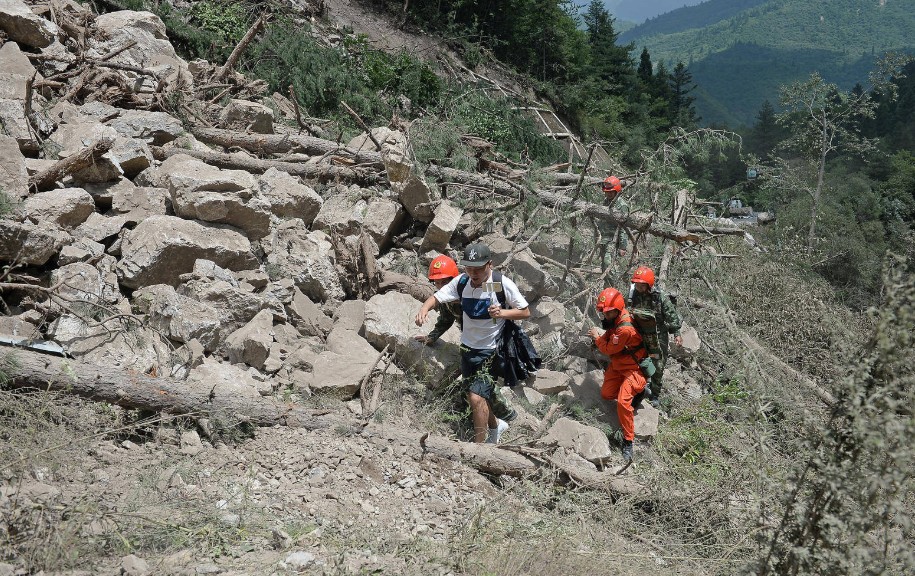
Everyone was evacuated safely. Sparkling Lake’s dam collapsed, draining the lake overnight. Nuorilang Waterfall’s travertine structure crumbled, turning China’s widest waterfall into ruins.
For a long time, people thought Jiuzhaigou was gone forever.
But nature heals itself. And so do humans.
Researchers spent two years using natural recovery + gentle human intervention to refill Sparkling Lake. Nuorilang Waterfall’s travertine was nurtured back to health, and water began cascading down again.
In 2019, the scenic area reopened.
I met a long‑time staff member who said: “On the day of the earthquake, I was at the ticket office. When the ground shook, I thought it was all over.”
“What about now?”
“Now? Every day I watch visitors come in, and I know it was all worth it.”
Is It Safe?
This is the most common question from American travelers.
Answer: Yes, it’s safe.
After the 2017 earthquake, the entire scenic area underwent full safety assessments and reinforcement. All walkways, viewing platforms, and facilities are now earthquake‑tested.
What’s more, Jiuzhaigou’s earthquake was a one‑time event — it is not in an active seismic zone.
How to Get There: A Practical Guide for American Travelers
Getting to Jiuzhaigou from the US is not a quick trip — but it’s worth every hour.
Route 1: Fly to Chengdu, then Bus (Most Budget‑Friendly)
- Los Angeles / San Francisco → Chengdu (direct flight ~12 hours)
- Chengdu Shuangliu Airport → Jiuzhaigou Valley (bus ~8–9 hours)
- Total travel time: ~24 hours
- Total cost: ~$800–1200 (round-trip flights + transport)
Route 2: Fly to Chengdu, then Connecting Flight (Fastest)
- Los Angeles / San Francisco → Chengdu (direct flight ~12 hours)
- Chengdu Shuangliu Airport → Jiuzhai Huanglong Airport (flight ~1 hour)
- Airport → Scenic Area (bus ~1.5 hours)
- Total travel time: ~18 hours
- Total cost: ~$1200–1800
Best Time to Visit
October — universally agreed as the peak season.
In autumn, Jiuzhaigou blends golden leaves, turquoise lakes, and white snow-capped peaks — like a living oil painting.
- July–August: rainy season, full water flow, but risk of landslides.
- November–March: low season, some sites closed, fewer crowds, perfect for quiet travelers.
Only One Day? Don’t Miss These 3 Spots
If you’re short on time, prioritize these:
- Five‑Flower Lake — the heart of Jiuzhaigou, the most colorful lake
- Nuorilang Waterfall — China’s widest waterfall, a post‑earthquake miracle
- Long Lake — highest and largest lake, with the most sweeping views
So Where Exactly IS Jiuzhaigou?
Back to the original question:
Which province, city and county is Jiuzhaigou located in?
Jiuzhaigou County, Aba Tibetan and Qiang Autonomous Prefecture, Sichuan Province.
But those three names are just coordinates on a map.
The real Jiuzhaigou is in the first ray of sunlight hitting Long Lake at dawn. It’s in the mist of Nuorilang Waterfall on your face. It’s in the blue of Five‑Flower Lake that makes you forget to press the shutter.
It’s a place you’ll fly 24 hours to see for just a glimpse.
A place an earthquake couldn’t destroy, that time can’t take away.
A place you visit once — and it stays in your heart forever.
If you only visit ONE place in China, choose this — not the Great Wall.
Quick Practical Info Table
| Item | Details |
|---|---|
| Province | Sichuan Province |
| Autonomous Prefecture | Aba Tibetan and Qiang Autonomous Prefecture |
| County | Jiuzhaigou County |
| Coordinates | 33°15′ N, 103°55′ E |
| Altitude | 2,000–3,100 meters |
| Number of Lakes | 108 |
| Widest Waterfall | Nuorilang Waterfall (270m wide, 24.5m tall) |
| Why the Water Is Blue | Calcium carbonate deposits + sunlight refraction |
| Best Season | October (autumn) |
| From Chengdu | 330 km, bus 8–9 hours |
| Entrance Ticket | ~$40–60 (peak season) |
| Recommended Stay | 2–3 days (1 day: Five‑Flower Lake, Nuorilang, Long Lake) |
One final message for every American planning to go:
Don’t just look it up on Google Maps. Come in person. Stand by the water. Let that blue sink into your eyes.
Then you’ll understand: some answers aren’t on a map. They’re on the road.
