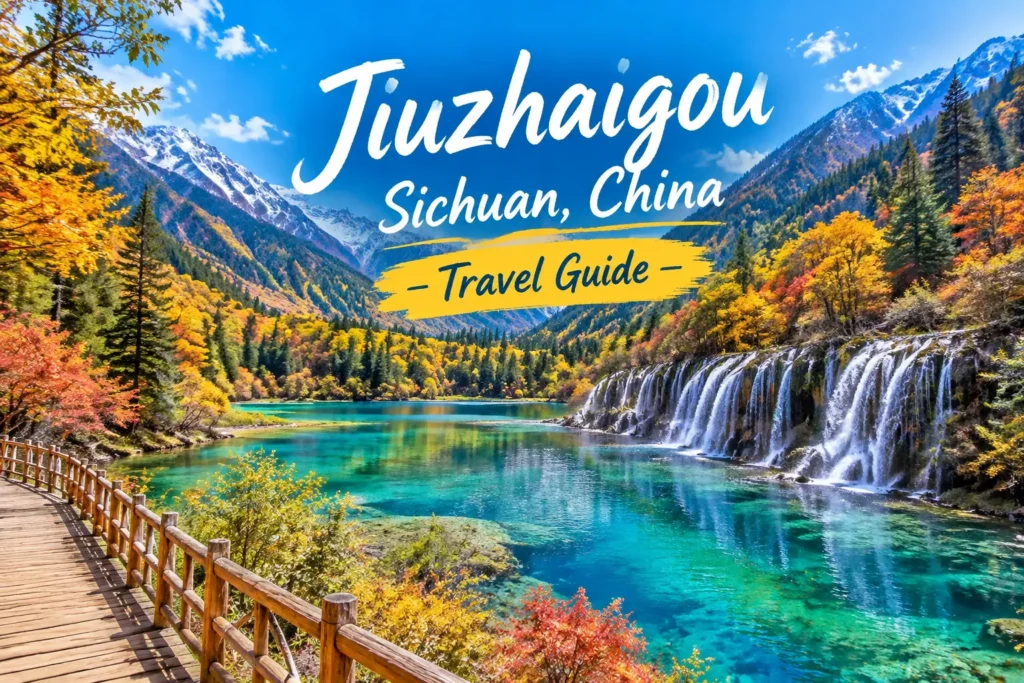
If you are hearing about Jiuzhaigou for the first time, you may wonder: exactly where is Jiuzhaigou located in China? How far is it from Beijing, Shanghai or Chengdu? Why do so many travelers to China put Jiuzhaigou on their travel list?
When I first learned about Jiuzhaigou, I was instantly fascinated by its unique natural scenery. It features crystal-clear alpine lakes, spectacular waterfalls, lush primeval forests and rolling snow-capped mountains. In particular, the blue and green tones of the lake water create stunning visual effects that shift with the seasons and sunlight.
Jiuzhaigou sits in Sichuan Province, China, and ranks among the country’s most famous natural travel destinations. For international visitors eager to explore China’s natural landscapes, it is well worth a dedicated trip.
In this article, I will cover the precise location of Jiuzhaigou, what makes it world-famous, top sights to visit, and how to plan your trip.
1. Where is Jiuzhaigou in China?
Jiuzhaigou is in southwestern China’s Sichuan Province, specifically in Jiuzhaigou County, Aba Tibetan and Qiang Autonomous Prefecture.
Search for “Jiuzhaigou China” or “China Jiuzhaigou” on a map, and you will find this renowned mountainous natural destination in western China.
Geographically, Jiuzhaigou lies on the eastern edge of the Qinghai-Tibet Plateau within the Minshan Mountain Range, surrounded by high mountains, forests, rivers and lakes.
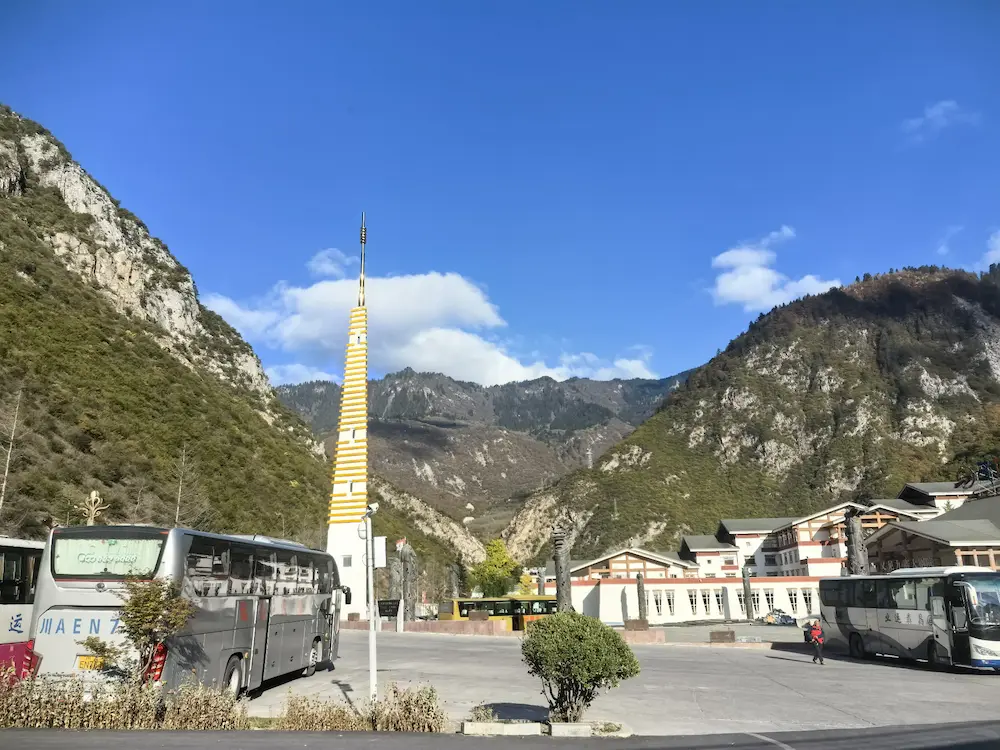
The scenic area itself is around Zhangzha Town in Jiuzhaigou County. It is a considerable distance from Chengdu, the capital of Sichuan Province, so visitors need to arrange transport well in advance.
You can understand its location layer by layer:
- Country: China
- Province: Sichuan Province
- Autonomous Prefecture: Aba Tibetan and Qiang Autonomous Prefecture
- County: Jiuzhaigou County
- Major tourist site: Jiuzhaigou Scenic and Historic Interest Area & Nature Reserve
Search “Jiuzhaigou County China” to locate the county seat. It serves as a key hub for tourist accommodation, transport and visitor services for the national park.
For first-time visitors to China, getting clear on its administrative and geographic location makes arranging transport and accommodation much easier.
2. Why is Jiuzhaigou one of China’s top travel destinations?
China has countless famous natural scenic spots, but Jiuzhaigou stands out for its vividly colored lakes and dramatic shifts in scenery between different water bodies.
Its landscapes consist mainly of alpine lakes, waterfalls, travertine landforms, forests and snow peaks.
2.1 Crystal-clear, multicolored alpine lakes
The lakes are what drew me most to Jiuzhaigou.
There are dozens of alpine lakes of varying sizes. Depending on light and water depth, the water glows in shades of blue, green and turquoise.
Many lakes are so transparent that you can see submerged trees and rocks on the lakebed.
Huahai (Five-Flower Lake) and Wucaichi (Five-Color Pond) are the most iconic examples.
2.2 Breathtaking natural waterfalls
Beyond lakes, Jiuzhaigou has many stunning waterfalls.
Nuorilang Waterfall and Pearl Shoal Waterfall are the best-known.
During the wet season, water cascades over rock faces and travertine flats for a dramatic display.
If you enjoy photography, these waterfalls deserve a prime spot on your itinerary.
2.3 Lush primeval forests
Jiuzhaigou is not only lakes and waterfalls; large swathes of forest cover the valleys.
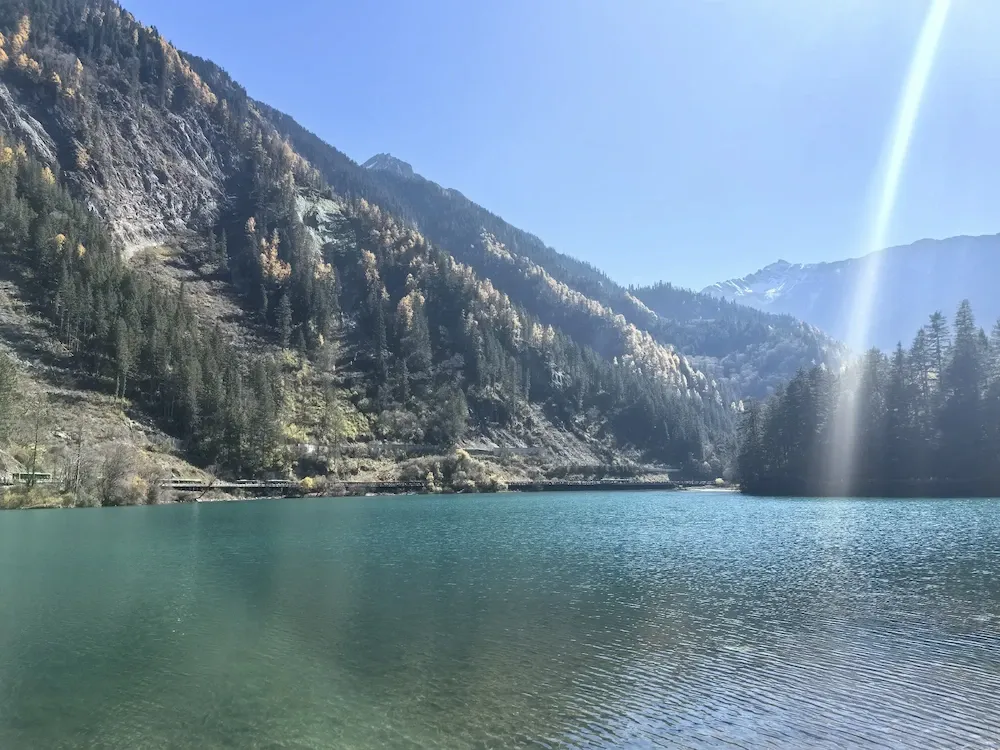
You will find a rich variety of trees and plant life. In autumn, foliage turns bright yellow, orange and red.
The contrast between colorful woods and turquoise lakes is why autumn is Jiuzhaigou’s most popular season.
2.4 Unique high-altitude mountain environment
Jiuzhaigou sits in high mountain terrain, with large elevation changes across the park.
Snow peaks, valleys, lakes and forests combine to form a distinctive alpine ecosystem.
In 1992, Jiuzhaigou was inscribed on the UNESCO World Heritage List.
For nature lovers, it is both a tourist attraction and an ecologically important protected site.
3. What are the must-see attractions in Jiuzhaigou?
If you plan to visit Jiuzhaigou National Park China, familiarize yourself with its landmark spots ahead of time.
The park follows a Y-shaped layout, made up of three valleys: Rize Valley, Zechawagou Valley and Shuzheng Valley.
Each valley offers a different landscape. Below are the highlights I recommend for first-time visitors:
3.1 Five-Flower Lake (Huahai)
Five-Flower Lake is one of Jiuzhaigou’s signature lakes.
Its water shows a rich palette of colors; under sunlight, layers of blue, green and yellow spread across the surface.
Submerged trees and surrounding forest add depth to the view.
If you only have time for a few photo stops, this should be high on your list.
3.2 Five-Color Pond (Wucaichi)
Five-Color Pond is relatively small but intensely colorful.
Variations in depth and water conditions create a swirling mix of hues.
Framed by mountain woodland, it is one of Jiuzhaigou’s most distinctive sights.
3.3 Long Lake (Changhai)
Long Lake is the largest lake in Jiuzhaigou.
Located in Zechawagou Valley, it is ringed by high mountains with deep blue water.
Compared with Five-Flower Lake, it feels wide, open and serene.
On clear days, mountain peaks reflect perfectly on its surface.
3.4 Nuorilang Waterfall
Nuorilang Waterfall is Jiuzhaigou’s most famous waterfall.
It stretches wide across a rock ledge, pouring down into a broad curtain of water.
It also acts as a major transit hub for shuttles heading to different valleys.
3.5 Pearl Shoal Waterfall
Pearl Shoal Waterfall sits in Rize Valley.
As water flows across the wide travertine shoal, it breaks into countless tiny splashes that look like pearls, hence the name.
Dense forest surrounds the waterfall for a lush, scenic setting.
3.6 Mirror Lake (Jinghai)
Mirror Lake is the best spot for perfect reflections.
When the wind is calm, mountains, trees and the sky mirror sharply on its still surface.
If you love nature photography, check the wind and weather to time your visit well.
4. How to get to Jiuzhaigou from other cities in China?
Jiuzhaigou lies in the mountainous northwest of Sichuan, quite far from most major Chinese cities.
If you travel to China from overseas, I recommend flying into Chengdu first, then continuing onward to Jiuzhaigou.
4.1 Traveling from Chengdu to Jiuzhaigou
Chengdu is the most common starting point, even though the road distance is long.
There are three main options:
- High-speed train + transfer bus Take a high-speed train to Huanglong-Jiuzhai Station, then transfer by road to the scenic area. The station is not right at the park gate, so you need to pre-book connecting transport.
- Chartered car or tourist coach Direct buses from Chengdu to Jiuzhaigou are widely available. Road trips normally take 7–9 hours, subject to road conditions, weather and traffic. Chartered cars work well for families or small groups.
4.2 Traveling from other Chinese cities to Jiuzhaigou
If you depart from Beijing, Shanghai, Guangzhou or other major cities, take a flight or high-speed train to Chengdu first, then connect to Jiuzhaigou.
This route is straightforward and lets you add Chengdu to your China itinerary.
4.3 Flying directly to Jiuzhaigou
Jiuzhai Huanglong Airport serves the area, and you can book flights depending on availability.
You will still need a ground transfer from the airport to the scenic area.
Flight schedules change seasonally, so confirm flights and connecting transport before booking.
5. When is the best time to visit Jiuzhaigou?
Jiuzhaigou has a different charm in every season.
My top pick is autumn, when forest colors peak and the contrast between lakes and foliage is spectacular.
5.1 Spring: Reawakening mountains
Spring brings fresh greenery to Jiuzhaigou.
As temperatures rise, new plants and wildflowers emerge in the valleys.
It is a good choice if you want to avoid heavy tourist crowds.
5.2 Summer: Lush woods and full waterfalls
Summer brings the thickest green foliage, and many waterfalls carry abundant water.
Thanks to its high elevation, Jiuzhaigou stays cooler than many lowland Chinese cities and is a popular summer escape.
5.3 Autumn: Vibrant colorful forests
If you want to see Jiuzhaigou at its most colorful, visit in autumn.
September to October is the prime window, when leaves turn golden, orange and crimson.
Colorful woodland paired with turquoise lakes creates Jiuzhaigou’s iconic scenery.
Bear in mind the peak foliage timing shifts yearly with temperature and weather.
5.4 Winter: Snow and icy landscapes
Winter transforms Jiuzhaigou completely.
Peaks are capped with snow, and ice forms around waterfalls and lake edges.
It is ideal for snow lovers and travelers looking to skip the autumn peak crowds.
Always verify winter opening rules and partial trail closures before you go.
6. How many days should I spend in Jiuzhaigou?
For first-time visitors to Sichuan, I recommend 3–4 days.
This gives you time for Jiuzhaigou plus nearby sites such as Huanglong.
6.1 3-day Jiuzhaigou itinerary
- Day 1: Travel from Chengdu to Jiuzhaigou Take the high-speed train + transfer bus or charter a car. Check into accommodation and rest for the full park day tomorrow.
- Day 2: Full day exploring Jiuzhaigou National Park Focus on Five-Flower Lake, Five-Color Pond, Long Lake, Nuorilang Waterfall and Pearl Shoal Waterfall.
- Day 3: Return to Chengdu After breakfast, head back to Chengdu. You can add extra stops along the route if your schedule allows.
6.2 4-day Jiuzhaigou & Huanglong itinerary
If you have extra time, I strongly recommend combining Jiuzhaigou with Huanglong.
- Day 1: Chengdu to Jiuzhaigou, check in
- Day 2: Full-day tour of Jiuzhaigou Explore its lakes, waterfalls and forest landscapes.
- Day 3: Jiuzhaigou to Huanglong Visit Huanglong National Scenic Area, famous for travertine pools, snow peaks and forests.
- Day 4: Return to Chengdu This itinerary lets you experience two distinct natural wonders in western Sichuan.
7. Practical tips for visiting Jiuzhaigou
Read these notes before your trip, especially if you are an international visitor new to China.
7.1 Book tickets in advance
Jiuzhaigou uses real-name ticketing.
Check official channels for reservations, pricing and opening hours.
Book ahead for summer and autumn peak seasons.
7.2 Are there shuttle buses inside the park?
Yes.
Shuttle buses run between the valleys and main viewing points.
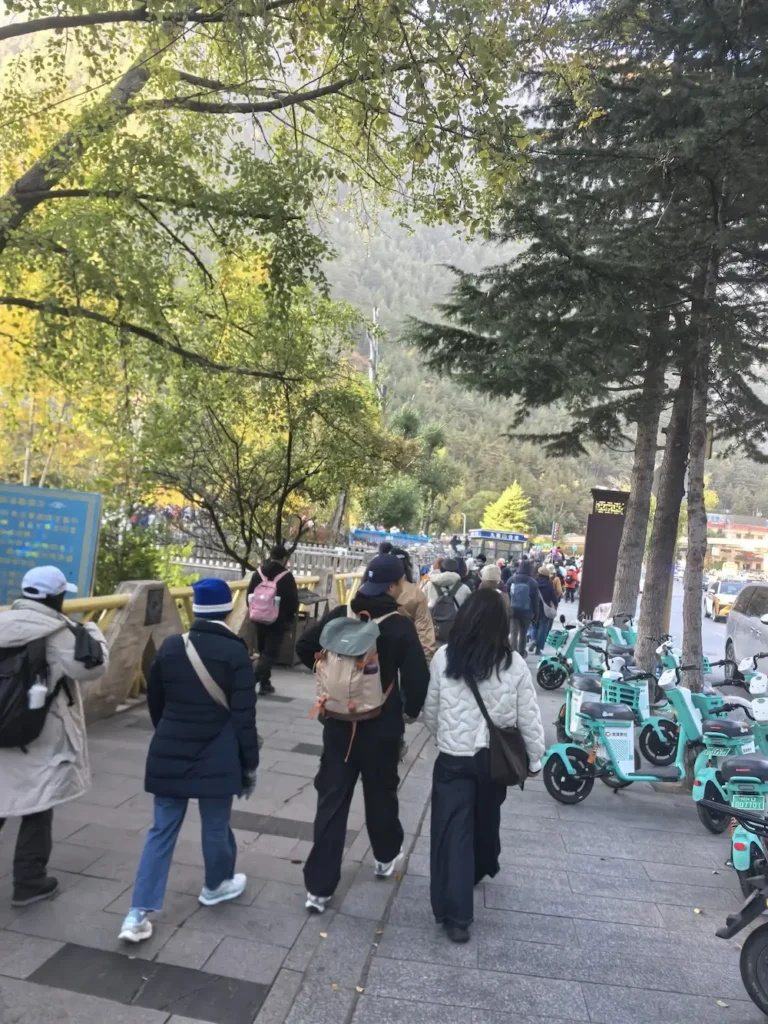
The park is vast, and shuttles are essential for getting around efficiently.
Routes and stops are subject to daily on-site announcements.
7.3 What to pack
I suggest bringing:
- Comfortable walking or hiking shoes
- Sunscreen, sunglasses and a sun hat
- A lightweight jacket for mountain weather
- Raincoat or umbrella
- Drinking water
- Phone, camera and portable power bank
- Personal medication
Also, parts of the park sit at high altitude. Avoid strenuous exercise at first to acclimatize gently.
7.4 Is Jiuzhaigou suitable for family trips?
I think it is excellent for family sightseeing.
Shuttles cut down long walks, but you will still walk between viewing platforms.
If traveling with elderly family or children, plan your route carefully to avoid backtracking and build in plenty of rest breaks.
8. What other spots can I visit nearby?
If you stay longer in Sichuan, do not limit yourself only to Jiuzhaigou.
Aba Prefecture and surrounding areas have many natural and cultural sites.
8.1 Huanglong National Scenic Area
Huanglong is the top nearby companion destination.
It is celebrated for tiered travertine pools, waterfalls, snow peaks and forests.
Its famous Five-Color Pond features stacked colorful pools with a unique look.
Nature lovers often pair Huanglong and Jiuzhaigou in one trip.
8.2 Songpan Ancient Town
Songpan Ancient Town is in Songpan County, Aba Tibetan and Qiang Autonomous Prefecture. It is a historic old town with preserved city walls and traditional architecture.
If you want to mix natural scenery with Chinese cultural heritage, plan a stop here.
8.3 Zoige Grassland
Zoige Grassland offers wide open grasslands, wetlands and rivers.
In summer, it is lush and expansive, creating a sharp contrast with Jiuzhaigou’s lakes and forests.
Photographers can add Zoige to a longer western Sichuan road trip.
9. Why add Jiuzhaigou to your first China trip?
On your first visit to China, you may naturally prioritize cities such as Beijing, Shanghai and Chengdu.
These cities showcase China’s history, culture, food and modern urban life.
But if you also want to see China’s extraordinary natural scenery, Jiuzhaigou deserves a spot on your itinerary.
The environment feels worlds away from big cities.
In Chengdu, you can enjoy Sichuan food, giant pandas and city life. In Jiuzhaigou, you will discover alpine lakes, waterfalls, forests and snow peaks. A side trip to Huanglong reveals rare travertine formations.
For international visitors, I suggest building a route starting from Chengdu and combining Jiuzhaigou and Huanglong.
If you are unfamiliar with transport in western Sichuan, pre-booking private charters, hotels and local tour services can remove the hassle of connections.
When you walk along the valleys, gazing at clear lakes and layered forests, you will understand why this scenic corner of Sichuan draws travelers from every corner of the globe.