When planning a trip to Sichuan, Dujiangyan is always a destination worth adding to your itinerary. It is not far from Chengdu, yet delivers a totally different travel experience. This place is home to the world-famous ancient irrigation project, as well as Mount Qingcheng, ancient towns, rivers, mountain forests and unique Western Sichuan culture.
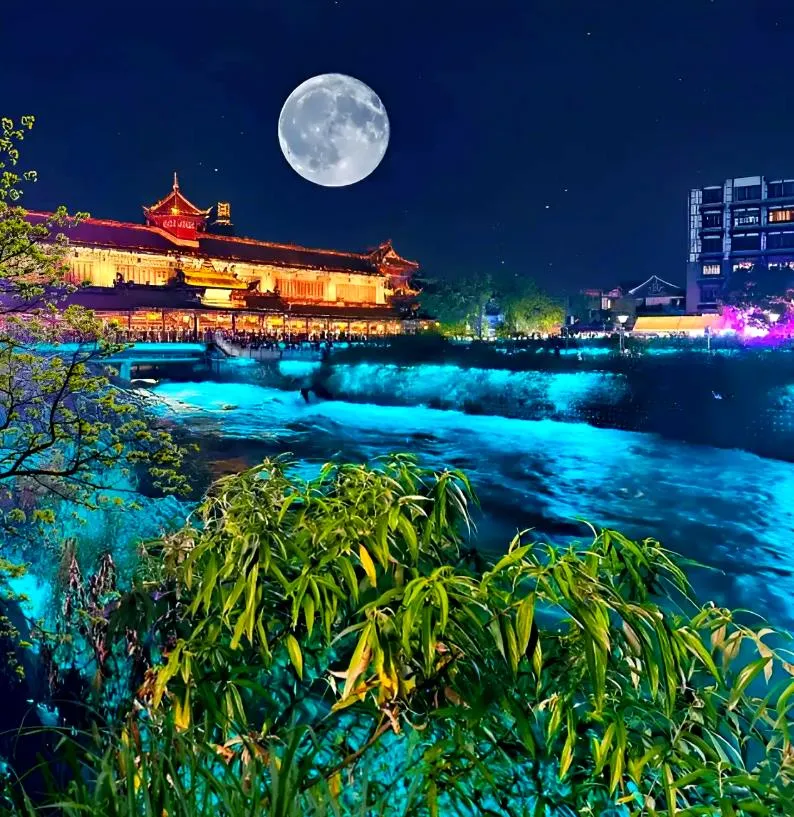
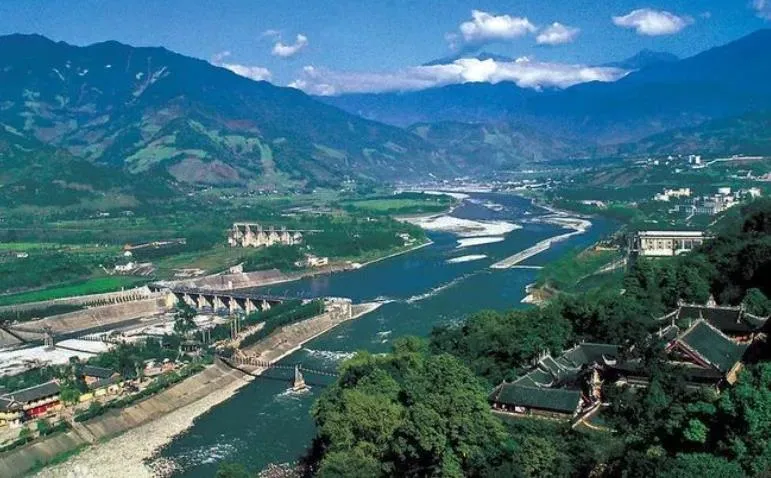
Many foreign travellers first hear about Dujiangyan because of its ancient irrigation project built more than 2,000 years ago. But once you arrive, you will find Dujiangyan has far more to offer. You can admire the ingenious design of the ancient water project along the Min River, experience Taoist culture at Mount Qingcheng, or view the glowing blue river water and city lights near Nanqiao Bridge at night.
If you are planning a trip to Sichuan and wondering where Dujiangyan is, what must-see spots it has, how to get there from Chengdu, and how to arrange a one-day itinerary, this guide will help you learn about Dujiangyan China and plan a relaxing, fulfilling trip.
1. Where is Dujiangyan? Why is it worth visiting?
Dujiangyan is located in Dujiangyan City, administered by Chengdu, Sichuan Province, China, roughly 60 kilometres from downtown Chengdu. It sits where the Min River flows into the Chengdu Plain and stands as one of Sichuan’s most iconic cultural travel destinations.
Dujiangyan’s most famous attraction is the Dujiangyan Irrigation System, constructed around 256 BC under the supervision of Li Bing, Governor of Shu during the Qin Dynasty, together with his team. It still functions today for irrigation, flood control and water allocation.
Unlike many ancient ruins that are no longer in use, the Dujiangyan Irrigation System remains a vital part of the water network serving the Chengdu Plain. By cleverly leveraging terrain and natural water flow, it achieves water division, sediment discharge and flow regulation.
To me, the best part of Dujiangyan is the way it connects ancient engineering, natural geography and modern daily life. A visit here lets you enjoy several types of travel experiences at once:
- History & Culture: Tour the 2,000-year-old Dujiangyan Irrigation System.
- Natural Scenery: Enjoy views of the Min River, mountain forests, valleys and Mount Qingcheng.
- Taoist Culture: Explore temples, historic buildings and traditional culture at Mount Qingcheng.
- Ancient Town Experience: Wander through Guanxian Ancient Town and taste local Sichuan food.
- Night Views: Watch the Min River night scenery and the famous “Blue Tears” glow near Nanqiao Bridge.
If your Sichuan trip is based in Chengdu, I highly recommend fitting Dujiangyan into your schedule.
2. What are the top attractions in Dujiangyan?
For first-time visitors to Dujiangyan Sichuan, I suggest prioritising the Dujiangyan Irrigation System, Mount Qingcheng and Guanxian Ancient Town. These three spots allow you to understand Dujiangyan from historical, natural and local lifestyle perspectives.
2.1 Dujiangyan Irrigation System
The Dujiangyan Irrigation System is the core attraction of the city and the main reason many travellers come here.
This ancient water project consists of three key components: Yuzui, Feishayan and Baopingkou. Working together, they use the natural terrain and current of the Min River to split the river, flush away sediment and control the volume of water flowing onto the Chengdu Plain.
- Yuzui (Fish Mouth): The water-dividing structure that juts into the river like a fish’s mouth. It splits the Min River into the Inner River for irrigation and the Outer River for flood discharge.
- Feishayan (Flying Sand Weir): An overflow and sediment discharge structure. When water levels rise, excess water flows over the weir, and it also helps block sediment from entering the Inner River.
- Baopingkou (Precious Bottle Neck): The man-made channel cut through the mountain that controls how much water enters the Chengdu Plain.
When you visit these three sections, I suggest not treating them merely as photo spots. Learning how they work together makes the tour much more interesting.
In 2000, the Dujiangyan Irrigation System and Mount Qingcheng were jointly inscribed on the UNESCO World Heritage List. It is a landmark achievement of ancient Chinese hydraulic engineering.
2.2 Mount Qingcheng
Mount Qingcheng is another must-see destination in Dujiangyan and one of the birthplaces of Chinese Taoism.
It is covered in dense forests, with old trees, stone paths, Taoist temples and pavilions scattered across the mountains. While the Dujiangyan Irrigation System showcases ancient engineering wisdom, Mount Qingcheng appeals to travellers who love nature, traditional architecture and Chinese culture.
Mount Qingcheng is split into Front Mountain and Back Mountain.
- Front Mountain: Focused on Taoist heritage and historic buildings, it features the Fuqing Temple, Natural Picture Pavilion, Tianshi Cave and Shangqing Palace. I recommend Front Mountain for first-time visitors wanting to learn about Taoist culture.
- Back Mountain: Known for raw natural scenery, including valleys, streams, waterfalls and woodland. It is ideal for hiking lovers.
Please note: Front Mountain and Back Mountain offer completely different experiences. It is generally not practical to visit both on a one-day trip with limited time.
2.3 Guanxian Ancient Town
If you want to experience local life in Dujiangyan, set aside time for Guanxian Ancient Town after visiting the irrigation system.
Located close to the Dujiangyan Irrigation System, it preserves old lanes, historic buildings and Sichuan-style commercial streets. You will find local snacks, teahouses, boutique shops and quiet walkways.
I love slowing down in places like this. Wandering the streets and trying local food helps you feel the authentic rhythm of the city far more than rushing between scenic spots. You can pair Guanxian Ancient Town with the irrigation system on the same day for your first visit.
2.4 Nanqiao Bridge
Nanqiao Bridge is one of Dujiangyan’s most popular photo spots, especially in the evening and at night.
The bridge sits beside the Inner Min River, framed by traditional buildings and city streets. By day, you can admire the river and architecture; after dark, the bridge and flowing water glow under decorative lights.
Many travellers come specifically to see the famous “Blue Tears” night effect around Nanqiao. The blue glow comes from a mix of lighting, water movement and shooting conditions. The actual view varies depending on weather, river flow and illumination.
If your schedule allows, do not rush away. Have dinner in Guanxian Ancient Town in the late afternoon, then stroll around Nanqiao to enjoy a relaxed evening.
2.5 Panda Valley
If you love giant pandas, you can add Panda Valley to your Dujiangyan itinerary.
Panda Valley in Dujiangyan is dedicated to giant panda conservation, wildlife research and public education. Compared with historic sites, it works well for family travellers and anyone interested in China’s wildlife.
It is a great stop if you bring children to Sichuan. Remember to follow park rules: keep quiet and do not feed the animals.
3. How to get to Dujiangyan from Chengdu?
Transport links between Chengdu and Dujiangyan are convenient, so many visitors choose a day trip departing from Chengdu.
First-time travellers in Sichuan can pick from high-speed trains, buses or private chartered cars based on budget, time and travel style.
3.1 High-speed Train
High-speed intercity trains are one of the easiest ways to travel from Chengdu to Dujiangyan.
Trains run from Chengdu towards Dujiangyan. You can pick the best station and departure time based on where you are staying. Once you arrive at Dujiangyan Station or Lidui Park Station, take local transport to your attractions.
If your main destinations are the Dujiangyan Irrigation System and Guanxian Ancient Town, look for trains to Lidui Park Station — it is much closer to the scenic area.
Check the latest timetables, fares and ticket availability through official railway channels before you travel, especially during Chinese public holidays.
3.2 Bus or Tour Bus
You can also take regular buses or organised tour buses from Chengdu to Dujiangyan.
This option suits travellers who do not want to plan train transfers. Some tour packages bundle the Dujiangyan Irrigation System, Mount Qingcheng or Panda Valley together, saving you the hassle of arranging transport separately.
3.3 Private Charter Car or Custom Tour
If you travel with family or friends and hope to visit multiple spots in one day, a private charter car is worth considering.
Compared with public transport, its advantages include:
- Flexible departure times
- No need to research stations and transfers
- Adjustable sightseeing order based on your interests
- Better for families with elderly travellers and young children
- Easy combinations of Dujiangyan, Mount Qingcheng and Panda Valley
For foreign visitors new to China who do not speak Chinese, booking a local guide and private tour service makes the trip smoother.
4. How to plan a one-day Dujiangyan trip?
If your time is limited, one day is enough to experience Dujiangyan’s highlights, as long as you plan your route sensibly.
4.1 Classic One-Day Itinerary for Dujiangyan
If you want to focus on history, culture and city scenery, follow this schedule:
- Morning: Dujiangyan Irrigation System Leave Chengdu, and once you arrive, tour the irrigation project. Make sure to see Yuzui, Feishayan and Baopingkou and learn how the ancient hydraulic system works.
- Noon: Guanxian Ancient Town After the irrigation site, head to Guanxian Ancient Town for lunch, try Sichuan snacks and soak up the local atmosphere.
- Afternoon: Choose between Panda Valley or Mount Qingcheng Pick Panda Valley if you want to see giant pandas; pick Front Mountain of Qingcheng if you prefer mountain scenery, Taoist culture and hiking.
- Evening: Nanqiao Bridge If time permits, return to Nanqiao Bridge for a walk along the Min River. If you do not need to head back to Chengdu the same day, you can dine nearby and wait for the night lights.
4.2 One-Day Tour: Dujiangyan + Mount Qingcheng
If you want to combine history and natural scenery, you can visit the Dujiangyan Irrigation System and Front Mountain of Qingcheng in one day.
However, both sites take plenty of time to explore. Mount Qingcheng especially can take longer than expected for climbing and temple visits.
I recommend leaving Chengdu very early, and plan your stops according to your fitness level — there is no need to rush just to check off landmarks.
5. 2-Day Dujiangyan Itinerary Recommendation
If you have two days, I recommend splitting Dujiangyan and Mount Qingcheng into separate days. This cuts down rushing and lets you enjoy the history and scenery at a gentle pace.
- Day 1: Dujiangyan History & Culture Tour Morning: Tour the Dujiangyan Irrigation System. Noon: Taste local food in Guanxian Ancient Town. Afternoon: Explore Guanxian Ancient Town and surrounding historic lanes. Night: Visit Nanqiao Bridge for night views.
- Day 2: Mount Qingcheng Nature & Culture Tour Morning: Head to Front Mountain of Qingcheng and visit Taoist temples and mountain buildings. Noon: Lunch near the scenic area. Afternoon: Continue exploring Mount Qingcheng and enjoy the forest environment. Evening: Return to Chengdu, or stay overnight in Dujiangyan before continuing your Sichuan trip.
If you enjoy hiking, you can fit Qingcheng Back Mountain into your schedule based on your fitness and the season.
6. When is the best time to visit Dujiangyan?
Dujiangyan has a subtropical monsoon climate with four distinct seasons, and it is accessible all year round. However, each season offers a different experience.
6.1 Spring (March–May)
Spring is a wonderful time to visit Dujiangyan and Mount Qingcheng. Temperatures rise, plants bloom, and the forests of Qingcheng feel fresh. It is ideal for hiking, photography and outdoor activities.
6.2 Summer (June–August)
Summer is relatively hot in Dujiangyan, with frequent rainfall. Mount Qingcheng’s forests offer cool shade. Still, summer is Sichuan’s rainy season, and mountain weather can change rapidly. Pack rain gear and non-slip shoes, and leave room in your schedule for weather adjustments.
6.3 Autumn (September–November)
Autumn is my top pick for travelling to Dujiangyan. The weather is usually comfortable, perfect for touring the irrigation project, ancient town and Mount Qingcheng. Mountain foliage turns rich colours, which is great for photos. Note that visitor numbers surge during the National Day holiday, so book transport and accommodation well in advance.
6.4 Winter (December–February)
Dujiangyan is quiet in winter with far fewer tourists than peak seasons. Mount Qingcheng has a peaceful winter atmosphere for slow travel lovers. Mountain temperatures can be low, and paths may be slippery, so bring warm clothes and anti-slip footwear.
7. What local food should you try in Dujiangyan?
When travelling in Sichuan, I always leave space in my itinerary for local food. Dujiangyan’s cuisine is similar to Chengdu’s, dominated by Sichuan dishes and snacks. There are many local specialties worth trying.
- Sichuan Cuisine: Famous for numbing, spicy, fresh and rich flavours. Try classics like twice-cooked pork, kung pao chicken and mapo tofu.
- Hot Pot: Great if you like spicy food. Broths vary in spiciness; order a double-flavour pot or clear broth if you cannot handle heavy spice.
- Chuanchuan Xiang (Skewer Hot Pot): One of Sichuan’s iconic street foods. Ingredients are threaded onto bamboo skewers and cooked in hot broth.
- Local Snacks: You can find a wide range of Sichuan snacks in and around Guanxian Ancient Town, perfect for eating while wandering.
If it is your first time in Sichuan, treat yourself to an authentic Sichuan meal in Dujiangyan to enrich your trip beyond sightseeing.
8. Practical Travel Information for Dujiangyan
Here are key tips to help your trip go smoothly.
8.1 How many days do you need for Dujiangyan?
One day is enough if you only visit the Dujiangyan Irrigation System, Guanxian Ancient Town and Nanqiao Bridge. Plan two days if you also want to explore Mount Qingcheng or Panda Valley at a relaxed pace.
8.2 How to buy Dujiangyan tickets?
Separate tickets are required for the Dujiangyan Irrigation System, Mount Qingcheng and Panda Valley. Prices, discounts and booking rules are subject to change. Check ticket details in advance via official scenic channels or trusted booking platforms. Many popular spots in China require advance reservations during holidays.
8.3 Is Dujiangyan suitable for children and elderly travellers?
Dujiangyan works well for family trips, but different attractions demand different fitness levels. The irrigation system and Guanxian Ancient Town are suitable for almost all visitors. Mount Qingcheng involves walking and climbing, so choose your route carefully based on the stamina of older adults and kids. If you travel with seniors or young children, stick to easy-access routes and avoid packing too many attractions into one day.
8.4 What should you pack for Dujiangyan?
I recommend comfortable walking shoes, rain gear, sun protection and season-appropriate clothing. If you plan to hike Mount Qingcheng, wear non-slip hiking shoes. Mountain weather in Sichuan shifts fast, so check the weather forecast before departure.
8.5 Are Dujiangyan and Mount Qingcheng the same place?
Both are located in Dujiangyan City, Sichuan, but they are separate attractions. Dujiangyan is famous for its ancient irrigation project, while Mount Qingcheng is known for Taoist culture and mountain scenery. They sit close to each other, so they are often arranged on the same travel route.
9. Other destinations near Dujiangyan worth visiting
If you have more time in Sichuan, you can combine Dujiangyan with other nearby spots.
9.1 Chengdu
Around 60 kilometres from Dujiangyan, Chengdu is the most common starting point for Dujiangyan trips. It is home to the Chengdu Research Base of Giant Panda Breeding, Kuanzhai Alleys, Jinli Ancient Street, Wuhou Shrine and People’s Park. You can experience city life and food in Chengdu first, then head out to Dujiangyan and Mount Qingcheng.
9.2 Mount Qingcheng
Mount Qingcheng is the most natural add-on to a Dujiangyan trip. If you are interested in traditional Chinese culture, Taoist architecture and mountain hiking, reserve a full day for it.
9.3 Panda Valley
Panda Valley suits anyone interested in giant pandas, especially families. It pairs well with the Dujiangyan Irrigation System to make a richer itinerary.
9.4 Leshan Giant Buddha
If you spend several days in Sichuan, you can visit Dujiangyan and Leshan Giant Buddha on separate days. The Leshan Giant Buddha is a world-famous stone carving. It offers a completely different cultural experience from Dujiangyan’s hydraulic heritage.
9.5 Jiuzhaigou
Jiuzhaigou is celebrated for its alpine lakes, waterfalls, forests and snow-capped mountains, one of Sichuan’s most iconic natural destinations. On a longer Sichuan trip, you can build a multi-day route covering Chengdu, Dujiangyan, Jiuzhaigou and Huanglong. These spots are far apart, so transport and accommodation need careful planning.
10. FAQs about Dujiangyan Travel
Q1: Where is Dujiangyan in China? Dujiangyan is a county-level city under Chengdu, northwest of downtown Chengdu, roughly 60 kilometres away. It is famous for the ancient Dujiangyan Irrigation System and Mount Qingcheng.
Q2: Why is Dujiangyan famous? It is renowned for its 2,000-year-old irrigation project that is still operational today. It demonstrates ancient Chinese wisdom in water management by working with natural terrain, and it is a UNESCO World Heritage Site.
Q3: How long does it take to travel from Chengdu to Dujiangyan? Options include high-speed trains, buses and private charters. Travel time depends on your starting point, transport mode and traffic conditions. High-speed trains are usually the most convenient choice.
Q4: Can you see Dujiangyan in one day? Yes. One day is enough for the irrigation system, Guanxian Ancient Town and Nanqiao Bridge. Plan two days if you want to explore Mount Qingcheng in depth.
Q5: Is Dujiangyan worth visiting? Absolutely. It combines ancient engineering, natural scenery and Taoist culture. It is a fantastic day trip from Chengdu for travellers wanting to learn about Sichuan’s history, culture and landscapes.
Q6: Is Dujiangyan suitable for foreign visitors? Yes. It has rich cultural heritage and well-developed tourist facilities. Foreign travellers can take high-speed trains independently, or join local day tours and private custom tours from Chengdu. Hiring an English-speaking guide makes the trip easier if you are unfamiliar with Chinese and local transport.
Q7: Which is better, Dujiangyan or Jiuzhaigou? They offer totally different experiences. Dujiangyan is ideal for travellers interested in ancient engineering, history, Taoist culture and short trips from Chengdu. Jiuzhaigou is famous for dramatic natural scenery, perfect for visitors who love lakes, waterfalls, forests and snow mountains. If you have enough time, I recommend visiting both.
Q8: Can I join a Dujiangyan day tour from Chengdu? Yes. Dujiangyan is close to Chengdu, with high-speed trains, buses and private cars available. For first-time foreign visitors, a packaged day tour from Chengdu is a hassle-free option. If you want to visit the irrigation system plus Mount Qingcheng or Panda Valley on the same day, plan your route early or book a private tour with transport and guide services.
11. Plan your trip to Dujiangyan
To me, Dujiangyan is more than a historic scenic spot — it is a place for travellers to dive deep into Sichuan. From the 2,000-year-old irrigation project to the Taoist culture of Mount Qingcheng, the lanes of Guanxian Ancient Town and Nanqiao’s night views, there is plenty to explore slowly.
If your Sichuan journey starts in Chengdu, I recommend setting aside at least one day for Dujiangyan. Two days will give you a more relaxed schedule if you want to experience the irrigation project, Mount Qingcheng and local culture together.
Whether it is your first trip to China, or you have already visited Chengdu, Jiuzhaigou and Leshan, Dujiangyan deserves a place on your Sichuan travel itinerary.