When you first hear about Fengdu Ghost City, you might picture a place that is truly haunted, or a horror-themed park built purely for tourists.
But in reality, it is far more interesting than these assumptions.
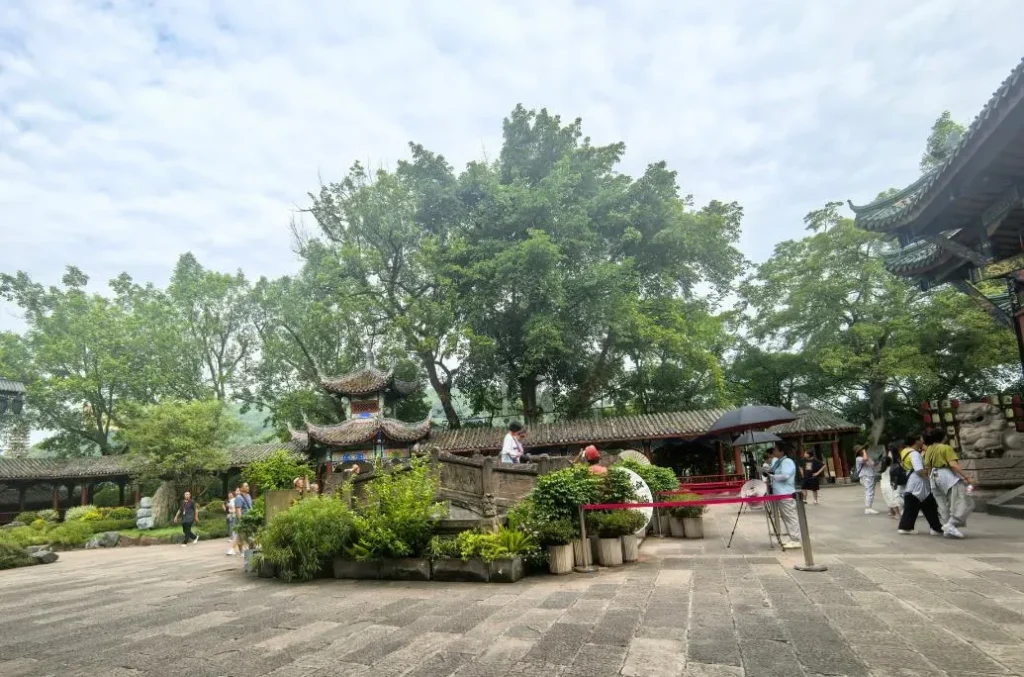
Fengdu Ghost City sits on Mingshan Mountain on the north bank of the Yangtze River in Fengdu County, Chongqing. It is one of China’s most well-known folk culture scenic spots. Here you will find structures and sculptures tied to traditional legends of the afterlife: Naihe Bridge, Ghost Gate Pass, Yellow Springs Road, Tianzi Hall and more. These buildings and statues express ancient Chinese beliefs about life and death, reincarnation, and karma.
If I take a Yangtze River cruise passing Fengdu, or travel there directly from Chongqing, I treat it as a chance to learn about traditional Chinese culture, not just a trip to chase thrills.
So what exactly can you see at Fengdu Ghost City? Is Naihe Bridge as frightening as the legends say? What is the difference between Tianzi Hall and the Ghost Kingdom Palace? Below I introduce the must-see attractions based on the actual visiting experience.
1. What is Fengdu Ghost City?
1.1 Where is Fengdu Ghost City?
Fengdu Ghost City is located in Fengdu County, Chongqing, on Mingshan Mountain along the north bank of the Yangtze River.
It is roughly 170 kilometers from downtown Chongqing and is a famous shore excursion stop on many Yangtze Three Gorges cruise itineraries. Many cruises departing from Chongqing arrange a stopover here for shore sightseeing.
One common misunderstanding: Fengdu Ghost City is not an ancient standalone ghost town. It is a cultural landscape cluster centered on the Mingshan Scenic Area built around netherworld legends.
What visitors see here are mainly temples, halls, archways, stone bridges and statues of mythological figures. The scenic area climbs along the mountain, and touring requires walking up mountain paths and stone steps.
1.2 Why is Fengdu called the Ghost City?
Fengdu earned its nickname from long-standing Taoist legends and folk tales local to the area.
One widely circulated story tells of two Taoist practitioners from the Eastern Han Dynasty: Yin Changsheng and Wang Fangping. Legend says they cultivated immortality on Mingshan Mountain in Fengdu.
Later, people combined their surnames “Yin” and “Wang” into “Yin Wang”, which sounds like “King of the Underworld”. Gradually, Fengdu came to be described in folk tales as the home of the afterlife. After the Tang and Song dynasties, these stories spread further. Buddhist concepts of hell, Taoist immortality beliefs and folk ideas of karma blended together, forming the Ghost City culture we know today.
These are only folk legends, of course. There is no real underground world inhabited by ghosts in Fengdu.
I think this point is key to understanding the site. What makes Fengdu Ghost City worthwhile is seeing how ancient Chinese people used myths and architecture to express their understanding of death, morality and cause and effect.
1.3 Cultural ideas behind Fengdu Ghost City
A well-known saying in traditional Chinese culture is “good deeds bring good rewards, evil deeds bring bad rewards”.
The buildings and sculptures of Fengdu Ghost City are built around this core idea.
In this imagined afterlife realm, the underworld runs like a mortal world: there are entry checkpoints, courts of judgment, judges, and places of punishment. After death, souls must go through trials to be judged for their deeds in life.
This framework turns abstract ideas about life and death into tangible scenes, making traditional ethics easier for ordinary people to grasp.
Mingshan Scenic Area combines elements of Confucianism, Buddhism and Taoism. Its cultural core advocates virtue, punishment for evil, justice and harmony.
2. Naihe Bridge: The Iconic Landmark of Fengdu Ghost City
2.1 What is Naihe Bridge?
If I had to pick the most remarkable spot in Fengdu Ghost City, it would be Naihe Bridge, also translated as the Bridge of Helplessness.
In Chinese folk legend, Naihe Bridge connects the mortal world and the underworld. After death, souls must cross this bridge to face judgment for their good and evil deeds.
The legend of Naihe Bridge is closely linked with Meng Po, the Wangchuan River and reincarnation. After crossing the bridge, souls drink Meng Po’s soup to forget their past lives before entering the next cycle of rebirth.
These stories appear frequently in Chinese literature, operas, films and folk tales.
2.2 What makes Naihe Bridge special?
The Naihe Bridge inside Fengdu Ghost City is a landmark structure of the scenic area.
It consists of three parallel stone arch bridges with a pond underneath. According to local lore, the middle bridge is tied to the judgment of good and evil, while the two side bridges are for prayers for peace and good fortune.
The legend says virtuous souls can cross the middle bridge safely, while evil ones may fall into the pond below.
This is only a traditional tale. For visitors today, Naihe Bridge is an ancient stone bridge rich in folk culture and history.
I would suggest taking time to observe its structure and surrounding sculptures instead of just snapping a photo and leaving.
2.3 Is Naihe Bridge scary?
If you worry it will be terrifying, there is no need for excessive fear.
Visited in daylight, it is simply an ancient landmark wrapped in folk legends. The sculptures below the bridge, nearby statues and associated stories carry a mysterious vibe, but there is no real danger.
If you are interested in traditional Chinese culture, it is a wonderful starting point to learn these folk beliefs.
3. Tianzi Hall: The Mythical Judgment Center of the Underworld
3.1 What is Tianzi Hall?
Tianzi Hall is one of the most important buildings in Fengdu Ghost City and the core attraction of Mingshan Scenic Area.
It houses statues of deities from folk beliefs about the underworld, most notably the legendary ruler of the afterlife.
In traditional Chinese stories, the underworld is not chaotic. It has a complete system of judgment and administration. Yama King presides over trials, judges keep records and evaluate deeds, while other gods and ghost officers carry out different duties.
Tianzi Hall displays this imagined underworld system through its layout, statues and decorations.
3.2 How old is Tianzi Hall?
Tianzi Hall was not built for modern tourism.
According to official scenic area records from Fengdu government, its origins stretch back to the Western Jin Dynasty. It had different names across dynasties and underwent repeated reconstruction and renovation. A major restoration took place in the third year of the Kangxi reign of the Qing Dynasty (1664). The existing building retains traces of later repairs.
It is one of the older, larger and best-preserved temples on Mingshan Mountain.
3.3 What can you see inside Tianzi Hall?
When entering Tianzi Hall, I focus on these highlights:
- Statues of Yama King and judges: to understand the traditional judgment system of the underworld.
- Hall architecture: observe the layout, roof design and ornamentation of a classic Chinese temple.
- Scenes of underworld tales: learn about ancient imagination of the afterlife through sculptures and murals.
- Traditional moral values: understand why these stories center on good and evil, karma and retribution.
For foreign visitors, Tianzi Hall is the best place in Fengdu Ghost City to experience traditional Chinese netherworld culture.
4. Ghost Kingdom Palace: A Dramatic Vision of the Underworld
4.1 What is Ghost Kingdom Palace?
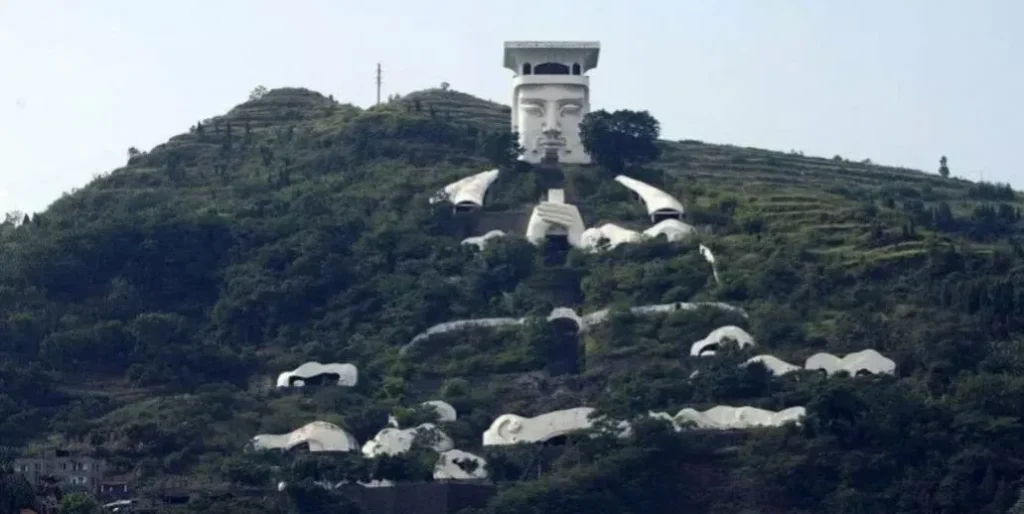
Besides Naihe Bridge and Tianzi Hall, many visitors hear about Ghost Kingdom Palace.
It is a themed landscape within Fengdu’s ghost culture tourism system, different from the traditional temple buildings on Mingshan Mountain.
Tianzi Hall presents underworld beliefs through old halls and statues, while Ghost Kingdom Palace focuses on immersive scenes and dynamic displays of the ghostly realm.
It uses a wide range of ghost statues and set designs to visualize the underworld from folk tales in a more direct way.
Important note: Ghost Kingdom Palace is not the same site as Tianzi Hall inside Mingshan Scenic Area. When planning your trip, double-check whether your sightseeing package includes it to avoid confusing different attractions.
4.2 Highlights of Ghost Kingdom Palace
The scenes are based on traditional Chinese ghost stories, with common themes including:
- Yama King and judges: showing the administration and judgment system of the underworld.
- Ox Head and Horse Face: ghostly guards who guide souls in folk legend.
- the 18 Hells: scenes illustrating punishments for evil deeds in traditional tales.
- Ghost statues: mythological figures with exaggerated, expressive forms.
These images draw from traditional religion, folk stories and literature, and do not represent the full doctrine of any single religion.
I think this site is best visited with cultural curiosity. If you learn about these mythical characters beforehand, you will understand each scene much better.
5. More Attractions Beyond the Three Main Spots
If you have plenty of time, I recommend exploring more of Mingshan Scenic Area instead of only visiting Naihe Bridge, Tianzi Hall and Ghost Kingdom Palace.
5.1 Ghost Gate Pass
Ghost Gate Pass is the legendary main entrance to the underworld in Chinese folk tales.
It is the gate souls must pass before entering the afterlife, depicted as a solemn gate guarded by ghostly figures.
At Fengdu Ghost City, Ghost Gate Pass is a signature cultural landmark. Standing here, you can clearly see how ancient people used real-world structures like gates and checkpoints to build their imagined underworld.
5.2 Yellow Springs Road
Yellow Springs Road is the name for the path to the afterlife in traditional Chinese culture.
Folk legend says souls travel along Yellow Springs Road to reach the underworld after leaving the mortal world.
At Fengdu Ghost City, the path, buildings and sculptures create a special atmosphere for visitors.
To me, the most fascinating part is how it turns an abstract folk concept into a walkable, observable landscape.
5.3 Wangxiang Terrace
Wangxiang Terrace, or the Terrace of Home-Gazing, is the place where souls, according to legend, get one last look at their hometown and loved ones before entering the underworld.
Compared with Ghost Gate Pass and the scenes of the 18 Hells, Wangxiang Terrace carries a gentler emotion.
It reflects the deep value Chinese culture places on hometown, family and kinship. Even in stories about death, people hold onto thoughts of the places and loved ones they care about.
5.4 Shuanggui Mountain
Shuanggui Mountain sits next to Mingshan Scenic Area in Fengdu, featuring forest and natural scenery.
If you do not want your whole trip to focus only on ghost culture, you can add Shuanggui Mountain as an extension stop.
Its natural scenery contrasts with the temples on Mingshan Mountain and makes your Fengdu trip more varied.
6. Is Fengdu Ghost City Scary? My Takeaway
This is the most common question international visitors search for when looking up Fengdu Ghost City.
My answer: there are exaggerated statues of ghosts and hell scenes, but daytime visits are far less terrifying than you might expect.
You can view the experience from three angles.
6.1 If you are afraid of ghost imagery
There are indeed dramatic statues of Ox Head, Horse Face, Yama King, judges and other ghostly figures. Some scenes depict traditional hell punishments, so visitors sensitive to such visuals may feel uncomfortable.
If you visit with young children, explain in advance that these displays only represent folk legends.
6.2 If you love history and culture
I believe Fengdu Ghost City is well worth visiting.
It is not built solely to shock visitors. Instead, a full set of buildings and stories showcase ancient Chinese ideas about life and death. You can learn:
- How traditional Chinese people understood death and reincarnation.
- Why Yama King, judges and Meng Po appear in folk tales.
- Why Naihe Bridge and Yellow Springs Road are recurring motifs in Chinese literature.
- Why traditional Chinese culture often emphasizes karma.
From this perspective, Fengdu Ghost City is a uniquely cultural scenic spot.
6.3 If you seek immersive thrills
Fengdu also offers immersive night tours in recent years, using lighting, projection, live performances and interactive scenes to present the netherworld culture.
Unlike daytime sightseeing focused on traditional architecture and culture, night tours prioritize atmosphere and live storytelling.
Night tour tickets and opening schedules differ from the daytime scenic area, so check the official latest announcements before your trip.
7. How to Fit Fengdu Ghost City into a Three Gorges Itinerary
7.1 Visiting by Yangtze River Cruise
Taking a Yangtze River cruise is one of the most convenient ways to visit Fengdu Ghost City.
Fengdu sits on the Yangtze River, and some cruises arrange shore excursions here. This option saves you the trouble of planning separate round-trip transport from Chongqing. Cruise operators usually set the docking time and shore tour schedule.
However, routes, stop times and included shore activities vary by cruise line. Confirm whether Fengdu Ghost City is included before you book.
7.2 Travelling from Chongqing by high-speed train or car
If you are not taking a cruise, you can travel independently from Chongqing. You can take a high-speed train to Fengdu Station then transfer to local transport to Mingshan Scenic Area; self-driving or private car charter are also options.
One important detail: Fengdu New County Town and Mingshan Scenic Area are not the same location. When navigating, set your destination to Mingshan Scenic Area, not just Fengdu County.
7.3 Recommended time allocation
Plan for roughly 2 to 3 hours if you only visit Mingshan Scenic Area, depending on your walking pace and how long you spend at each spot. Add extra time if you also visit Shuanggui Mountain or join the night tour.
The scenic area has many mountain paths and steps. Wear comfortable shoes. If anyone in your group struggles with steep walking, check the availability of cable cars before arrival.
8. Things to Know Before Visiting Fengdu Ghost City
8.1 Opening hours and tickets
Ticket prices, opening hours and special experiences may change by season and operation arrangements. Do not rely on outdated guidebook prices. Confirm the latest information via official scenic channels or trusted ticket platforms before departure.
8.2 Respect local religious and folk customs
Mingshan Mountain is not only a tourist attraction; it also hosts spaces for traditional religion and folk worship. Keep quiet when visiting temples and halls. Do not touch statues, offerings or religious artifacts, and respect worshippers and local rituals.
8.3 Wear comfortable footwear
Mingshan Scenic Area climbs uphill, and touring requires lots of walking and stair climbing. If you plan to see Naihe Bridge, Ghost Gate Pass, Tianzi Hall and all main sites, wear non-slip comfortable shoes and bring drinking water.
8.4 Do not treat it merely as a horror attraction
To me, the greatest value of Fengdu Ghost City is not chasing scary scenes, but discovering the stories behind them. Standing on Naihe Bridge, you connect with Chinese legends of life, death and reincarnation. Walking into Tianzi Hall, you see the ancient imagined underworld court system. Following Yellow Springs Road to Wangxiang Terrace, you encounter reflections on virtue, family, hometown and life.
If you want a different cultural experience besides natural scenery on your Yangtze Three Gorges trip, I would recommend adding Fengdu Ghost City to your itinerary.