If you are planning a trip to Sichuan for the first time, the Leshan Giant Buddha will most likely land on your travel list. Carved into a mountainside, this colossal Buddha statue is not only one of China’s most renowned historical and cultural heritage sites but also a landmark attraction in Sichuan.
When arranging your itinerary, I’ve noticed many travelers search for practical information first, rather than the history of the Buddha: Leshan Giant Buddha location — exactly where is the Leshan Giant Buddha? How far is it from Chengdu? How do you get there from Chengdu? And what can you see once you arrive at the scenic area?
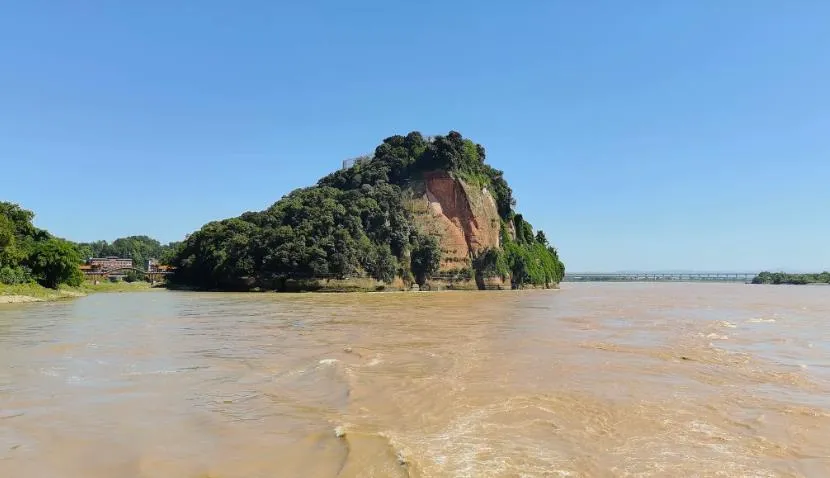
The Leshan Giant Buddha sits in Shizhong District, Leshan City, Sichuan Province, China. It is carved into the cliff of Lingyun Mountain, facing the confluence of the Min River, Dadu River and Qingyi River. Together with Mount Emei, it is inscribed on the UNESCO World Heritage List, making it a worthwhile stop on any Sichuan itinerary.
In this article, I will cover its geographic location, transport options, sightseeing routes, best visiting seasons and nearby trip ideas, to help first-time visitors to Sichuan plan their journey easily.
1. Where is the Leshan Giant Buddha?
1.1 Exact Location of the Leshan Giant Buddha
The Leshan Giant Buddha Scenic Area is located at No. 2435 Middle Lingyun Road, Shizhong District, Leshan City, Sichuan. It lies in the southeast urban area of Leshan on Lingyun Mountain.
It is not a standalone statue placed on a square; it is carved directly into the cliff face of the mountain. The Buddha overlooks the meeting point of three rivers, with Lingyun Mountain rising behind it. Surrounding the statue are temples, forests, ancient stone carvings and historic relics.
For Google Maps navigation, you can search: Leshan Giant Buddha, Leshan, Sichuan, China Or: Leshan Giant Buddha Scenic Area This will help you locate the site and navigation routes easily.
1.2 How Far is Leshan Giant Buddha from Chengdu?
Leshan is in the south-central part of Sichuan, roughly 140 kilometres away from Chengdu. It works well as a day trip destination departing from Chengdu.
There are two main ways to travel from Chengdu to Leshan:
- High-speed train: Board trains from Chengdu East Railway Station to Leshan Station, then transfer by bus, taxi or ride-hailing service to the scenic spot.
- Private car: Self-drive or charter a car, travelling via the expressway to central Leshan.
High-speed train rides between Chengdu and Leshan normally take 45 to 70 minutes, depending on the specific train. After arriving at Leshan Station, you still need extra travel time to get to the scenic area.
I would recommend high-speed trains for overseas travellers visiting Sichuan for the first time. The service is convenient, and you do not need to handle long-distance driving or parking issues.
1.3 The Connection Between Leshan Giant Buddha and Mount Emei
Many travellers search for Leshan Giant Buddha and Mount Emei together. They sit close geographically and jointly form a major UNESCO World Heritage property.
The Leshan Giant Buddha is inside Leshan City, while Mount Emei is near Emeishan City. The two scenic spots are about 40 kilometres apart and connected by highways.
They offer distinctly different travel experiences:
- Leshan Giant Buddha: Highlights include the huge stone Buddha, Buddhist culture, ancient architecture and views over the three rivers.
- Mount Emei: Famous for Buddhist monasteries, alpine forests, natural scenery and the Golden Summit.
If you have enough travel time, I suggest visiting both destinations on the same Sichuan trip, instead of rushing through both in one single day.
2. Why Visit the Leshan Giant Buddha?
2.1 One of the World’s Great Giant Stone Buddha Statues
What strikes visitors most about the Leshan Giant Buddha is its scale.
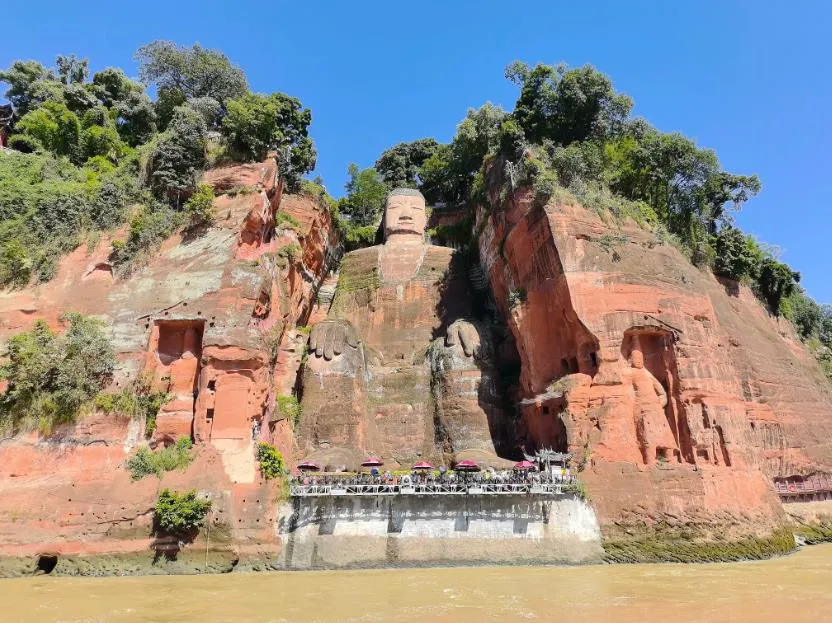
Standing approximately 71 metres tall, it ranks among the tallest stone-carved Buddha statues worldwide and represents an iconic sculptural heritage site on the World Heritage List.
The entire figure, from head to toe, was carved straight out of the mountain cliff. When you stand close by, you will immediately feel the massive scale contrast between the statue and the surrounding mountain.
In my opinion, the most rewarding part of seeing the Leshan Giant Buddha in person is not merely its height, but understanding how ancient craftsmen completed such an enormous project on a sheer cliff.
2.2 A Tang Dynasty Stone Carving Built Over 90 Years
Construction of the Leshan Giant Buddha began in the Kaiyuan reign of the Tang Dynasty, in 713 AD, and finished around 803 AD. The whole project spanned roughly 90 years.
At that time, the Min, Dadu and Qingyi Rivers converged here, creating treacherous water currents. Building the Buddha was closely tied to local hopes of taming floods.
After restoration and conservation work across many historical periods, the statue survives to this day.
Learning its construction background deepens the visiting experience for me. It is more than a religious artwork; it embodies ancient Chinese wisdom in mountain carving, engineering and water management.
2.3 Unique Scenery at the Three-River Confluence
The setting of the Leshan Giant Buddha is extraordinary.
From certain viewing platforms in the scenic area, you can watch the Min River, Dadu River and Qingyi River merge together.
Mountains, rivers, ancient buildings and the Buddha combine to create this distinctive landscape mixing nature and culture.
When the weather is clear, I recommend setting aside time to appreciate the three-river junction view, instead of focusing only on the Buddha statue itself.
3. Must-see Spots Inside Leshan Giant Buddha Scenic Area
3.1 The Leshan Giant Buddha Main Statue
Once inside the scenic zone, the main attraction is naturally the Buddha itself.
Tourists can follow the built walkways in the park to approach the statue and observe details of its head, shoulders, arms and feet.
The Buddha is so large that capturing the full statue in one photo from up close is difficult. Try stopping at different viewing points to appreciate its scale from multiple angles.
3.2 The Nine-Bend Plank Road
The Nine-Bend Plank Road is a signature trail inside the scenic area.
It winds along the cliff beside the Buddha. Visitors walk up and down the path to view the statue at close range from different elevations.
This route includes many steps and slopes, and queues are common during holidays and peak travel seasons.
If you travel with elderly guests, young children or visitors with limited mobility, plan carefully around physical stamina and waiting time.
3.3 Lingyun Temple
Lingyun Temple sits on Lingyun Mountain and is an important Buddhist site within the Leshan Giant Buddha scenic zone.
If you are interested in Chinese Buddhist culture, you can visit the temple after seeing the Buddha and admire its historic architecture.
This visit offers a different experience from viewing the giant statue up close, perfect for slow appreciation of traditional temple buildings and Buddhist culture.
3.4 Wuyou Mountain and Surrounding Views
Wuyou Mountain lies next to the Leshan Giant Buddha Scenic Area. Together with rivers and mountain scenery, it shapes the natural landscape of this region.
If your schedule allows, you can explore Wuyou Temple and surrounding attractions.
I decide whether to add this part of the itinerary based on opening hours and personal energy levels, rather than cramming every sight into a tight schedule.
4. How to Get to Leshan Giant Buddha: Transport Options
For international tourists arriving in Sichuan, I recommend first travelling to Chengdu before heading to Leshan.
4.1 High-speed Train from Chengdu
This is my preferred transport option.
Take a high-speed train from Chengdu to Leshan Station; the ride normally lasts 45–70 minutes. Upon arrival at Leshan Station, take a public bus, taxi or ride-hailing vehicle to the Leshan Giant Buddha Scenic Area.
Note that Leshan Station is not right beside the scenic entrance, so the train ride alone does not equal door-to-door travel time.
If you plan a same-day return trip to Chengdu, choose an early train and confirm return tickets ahead of time.
4.2 Self-drive from Chengdu
Self-driving is a good choice if you want flexible travel arrangements in Sichuan.
From Chengdu, take expressways such as the Chengdu–Leshan Expressway into central Leshan, then follow navigation to the scenic spot.
Self-driving gives you full control over your schedule, especially if you plan to combine Leshan Giant Buddha, Mount Emei and other nearby destinations.
However, traffic jams and limited parking around the scenic area are common on holidays and peak dates, so plan ahead.
4.3 Travel to the Scenic Spot from Downtown Leshan
If you are staying in central Leshan, getting to the Leshan Giant Buddha is much simpler.
Choose buses, taxis or ride-hailing services depending on your hotel location.
When navigating, search directly for the visitor centre or confirmed entry gate instead of just searching “Leshan Giant Buddha”.
The scenic area has multiple visitor centres and entry points. Double-check the entry gate listed on your ticket after purchase.
5. Best Time to Visit Leshan Giant Buddha
The site is open year-round, yet weather, scenery and visitor crowds change with seasons and affect your experience.
5.1 Spring: Great for Outdoor Sightseeing
Temperatures in Leshan rise gradually in spring, and outdoor activities are comfortable.
If I arrange a Sichuan trip in spring, I often pair Leshan Giant Buddha with Mount Emei to combine cultural heritage visits and mountain scenery.
5.2 Summer: Watch Out for Heat and Rain
Parts of Sichuan get hot in summer, and Leshan can feel humid.
If visiting in summer, enter the scenic area early in the morning and avoid climbing trails and the plank road during the hottest midday hours.
Rainfall is frequent in Sichuan summers, and stone steps and paths become slippery when wet. Wear non-slip walking shoes.
5.3 Autumn: Ideal for Leshan & Mount Emei Trips
Autumn is my recommended travel season.
The weather is pleasant for long outdoor sightseeing, and it is easy to link Leshan Giant Buddha, Mount Emei and other spots around Chengdu in one trip.
For photos of the mountain, rivers and Buddha, check weather forecasts and pick days with good visibility.
5.4 Winter: Fewer Visitors, But Watch the Weather
Temperatures drop in Leshan during winter, and rainy, overcast days occur regularly.
If you dislike crowded attractions, avoid Chinese New Year holidays and visit on regular weekdays.
That said, opening hours and some sightseeing services may be adjusted in winter, so check official notices before departure.
6. How Much Time Do You Need at Leshan Giant Buddha?
Set aside about half a day if you only plan to visit the main Buddha and core attractions.
Reserve extra time if you intend to walk the Nine-Bend Plank Road, explore temples, admire surrounding views or take a river cruise to view the Buddha from the water.
6.1 Half-day Itinerary
Suitable for day-trippers departing Chengdu: Arrive at Leshan Giant Buddha Scenic Area View the main Buddha statue Walk the Nine-Bend Plank Road Visit Lingyun Temple and nearby sites Optional river sightseeing cruise based on available time
6.2 Full-day Itinerary
For a fuller Leshan experience: Morning: Tour Leshan Giant Buddha, the statue, Nine-Bend Plank Road and Lingyun Temple. Midday: Head into downtown Leshan to try local food. Afternoon: Visit Wuyou Mountain or take the river Buddha cruise, then travel back to Chengdu.
If you want to taste local specialities, look for boboji (spicy cold skewers), sweet crispy duck, qiaojiao beef and tofu pudding.
7. Best Spots to View Leshan Giant Buddha
Many travellers ask whether to walk inside the scenic area for a close view or take a boat on the river.
These two options deliver totally different viewing experiences.
7.1 Close View from Mountain Trails
Walking inside the park lets you examine fine details of the Buddha’s carving.
Walking the Nine-Bend Plank Road, in particular, lets you see the statue from different heights and feel its immense size.
Pick this option if you want to study the Buddha’s structure and ancient carving craftsmanship.
7.2 River Cruise View
A boat tour on the river is a great choice if you want to see the complete outline of the Leshan Giant Buddha.
From the water, you can see how the statue blends into the mountainside and understand why this cliff at the three-river confluence was chosen for the carving.
Note that river sightseeing services, ticket prices and routes are subject to seasonal weather, water levels and operational schedules. Check the latest arrangements on the day you travel.
8. Other Attractions Near Leshan Giant Buddha
Once you reach Leshan, I do not recommend rushing away after seeing only the Buddha. There are many worthwhile destinations nearby to combine into your itinerary.
8.1 Mount Emei
Mount Emei sits not far from Leshan City and is a world-famous destination for nature and Buddhist culture.
Highlights include the Golden Summit, Baoguo Temple, Wannian Temple and Qingyin Pavilion. It offers mountain views and deep exposure to Buddhist culture.
If you have two or more days, combine Leshan Giant Buddha and Mount Emei on the same trip.
8.2 Downtown Leshan
Downtown Leshan is perfect for food tasting and casual city sightseeing.
Apart from local snacks, you can stroll along the riverside and experience the unique bond between this city and its three rivers.
For overseas visitors, Leshan is not only a World Heritage site, but also a city with distinctive Sichuan local lifestyle.
8.3 Chengdu
Chengdu is roughly 140 kilometres away from Leshan and serves as the main gateway city for most travellers heading to Leshan.
If this is your first Sichuan trip, spend time in Chengdu visiting Wide and Narrow Alleys, Jinli Ancient Street, Wuhou Shrine and Chengdu Research Base of Giant Panda Breeding.
This makes your trip cover both natural and historic heritage plus authentic Sichuan urban culture.
9. Important Tips Before Visiting Leshan Giant Buddha
9.1 Confirm Tickets and Entry Gates in Advance
Ticket prices, opening hours and sightseeing services can change by season and park management rules.
Buy tickets and check information through official channels, and confirm whether your ticket covers mountain sightseeing or only the river cruise.
These two products grant access to separate experiences and locations.
9.2 Wear Suitable Footwear
The scenic area has many stone steps, ramps and mountain paths, especially the Nine-Bend Plank Road which demands physical effort.
If you plan a full tour, wear comfortable, non-slip trainers instead of shoes unsuitable for long walks.
9.3 Avoid Major Chinese Public Holidays
Scenic spots across Sichuan get extremely busy during Spring Festival, Labour Day and National Day holidays.
Adjust your travel dates if possible and visit on weekdays to skip long queues and travel at a relaxed pace.
9.4 Follow Rules for Religious Sites
The Leshan Giant Buddha is not just a tourist attraction; it is a culturally significant Buddhist heritage site.
Keep quiet while visiting temples and religious zones, follow posted rules, do not touch relics or damage park facilities.
9.5 Build Buffers Into Your Transport Schedule
If you need to return to Chengdu or catch flights/trains later in the day, leave extra buffer time for travel.
Do not book return high-speed trains with very tight timelines during peak travel seasons.