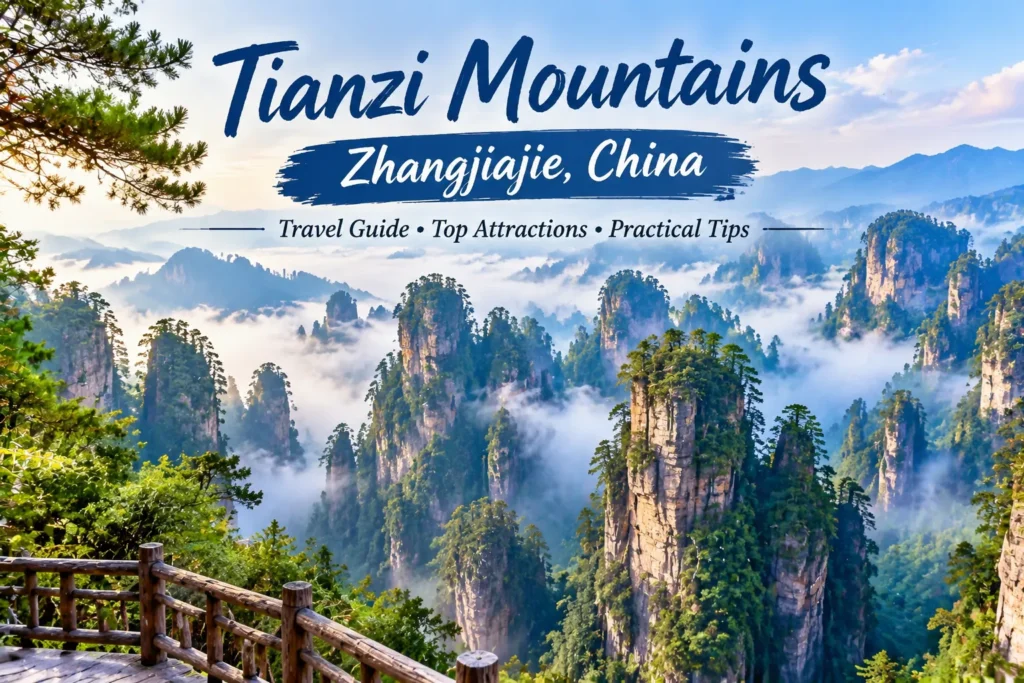
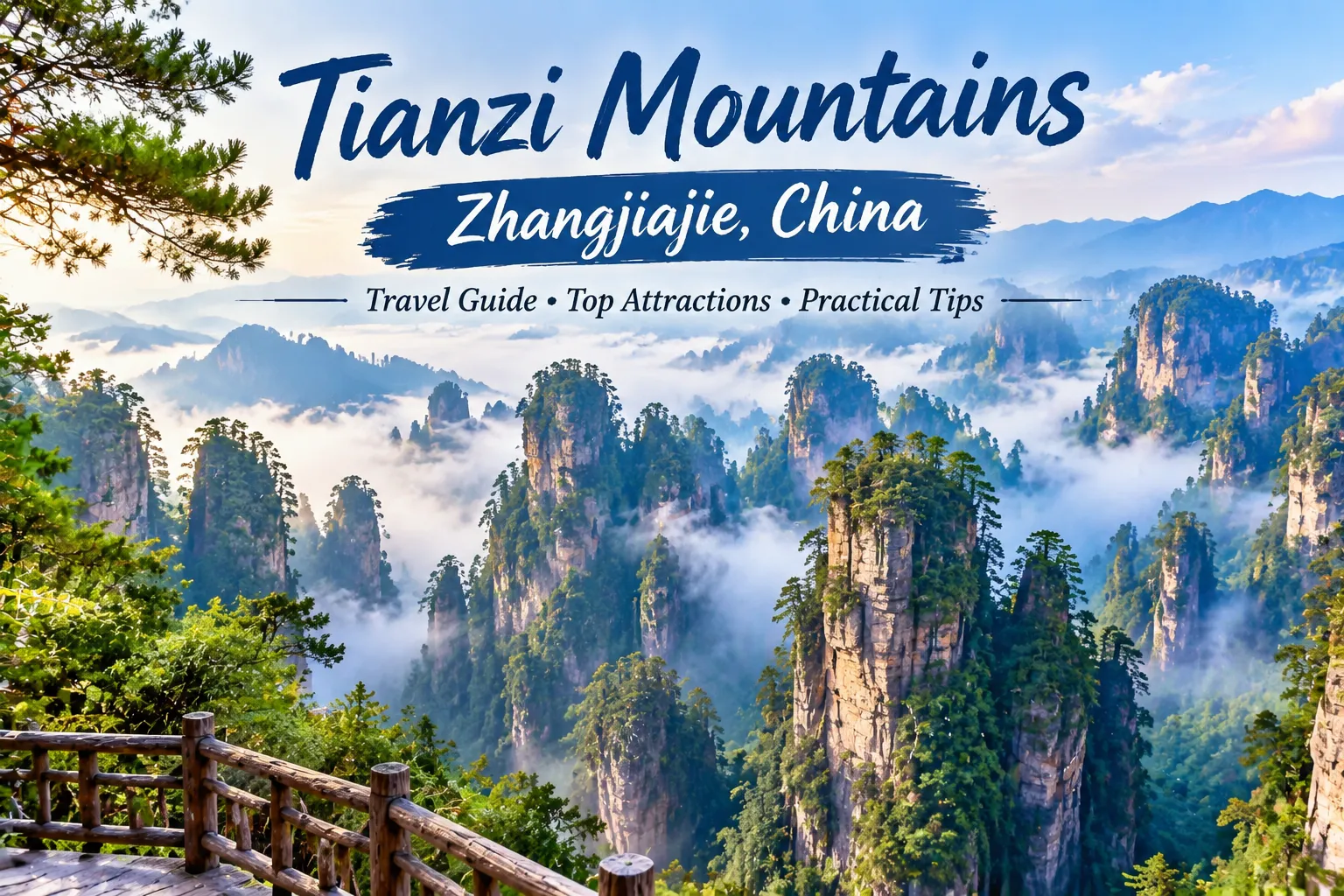
If you are planning a trip to Zhangjiajie in Hunan, China, I highly recommend adding Tianzi Mountain to your itinerary. Its greatest charm is not a single isolated peak, but endless stretches of quartz-sandstone peak forests. Standing on the mountain viewing platforms, you can watch uniquely shaped stone pillars rising sharply from deep valleys. When the weather cooperates, clouds drift between the peaks, forming spectacular sea-of-clouds scenes.
Many travelers searching for Tianzi Mountains China want clear answers to these questions: Where exactly is Tianzi Mountain in China? What is its relationship with Zhangjiajie National Forest Park? What are the top sights? How do I get there from downtown Zhangjiajie? How much time should I set aside?
This guide covers its location, key landscapes, transport options, best visiting seasons and practical itinerary planning, helping you organise your Zhangjiajie trip smoothly.
1. Where Is Tianzi Mountain? Tianzi Mountains China
1.1 Location of Tianzi Mountain
Tianzi Mountain sits within the Wulingyuan Scenic Area of Zhangjiajie City, Hunan Province. It forms an important part of Zhangjiajie National Forest Park and is one of the core scenic zones of the Wulingyuan UNESCO World Natural Heritage Site.
If you start from downtown Zhangjiajie, you will first travel to Wulingyuan Scenic Area, then take the park eco-shuttle bus or Tianzi Mountain Cable Car to reach the upper viewing zone.
Tianzi Mountain is not a separate scenic area independent of Zhangjiajie National Forest Park. It is an essential piece of Wulingyuan’s iconic peak forest landscape, alongside Yuanjiajie, Yangjiajie, Huangshizhai and Golden Whip Stream.
Geographically, Tianzi Mountain lies in the northern section of Wulingyuan, with its main peak reaching roughly 1262 meters above sea level. Its high terrain delivers wide open viewpoints, perfect for overlooking Zhangjiajie’s distinctive sandstone peak forests.
1.2 Why Is Tianzi Mountain Famous?
What fascinates me most about Tianzi Mountain is its extraordinary landform. Hundreds of tall, slender, uniquely shaped quartz-sandstone pillars scatter across the area. Unlike ordinary mountain ranges that form a continuous mass, these stone pillars stand separately, rising straight out of valleys and forests.
On clear days, layered peaks stretch far into the distance. After rain or on misty days, peaks drift in and out of cloud, turning the valley into a traditional Chinese ink painting.
Wulingyuan Scenic Area holds more than 3,000 quartz-sandstone pillars, many taller than 200 meters. This rare landform makes Zhangjiajie one of China’s most iconic natural destinations. Wulingyuan was inscribed on the UNESCO World Natural Heritage List in 1992.
1.3 The Relationship Between Tianzi Mountain and Zhangjiajie
If you are new to Zhangjiajie travel, these names can be confusing. Here is a simple breakdown:
- Zhangjiajie: A tourist city in Hunan Province, China.
- Wulingyuan: Zhangjiajie’s premier natural scenic zone and World Natural Heritage Site.
- Zhangjiajie National Forest Park: The main sightseeing zone within Wulingyuan.
- Tianzi Mountain: A major viewing area inside Zhangjiajie National Forest Park.
- Yuanjiajie: Famous for its landmark sandstone pillar, Hallelujah Mountain.
So when you search for Tianzi Mountain Zhangjiajie, you are looking for Tianzi Mountain inside Wulingyuan Scenic Area, not a separate mountain range in another city.
One critical reminder: Tianzi Mountain and Tianmen Mountain are NOT the same place. Tianmen Mountain is known for its Heaven’s Gate Cave, glass walkways and winding mountain road, with its own separate entrance and ticketing rules. Do not mix them up when planning your trip.
2. Top Attractions at Tianzi Mountain
Tianzi Mountain’s highlights are its mountaintop viewing platforms, peak forest clusters and iconic natural formations. If your time is limited, focus on these highly recognizable viewpoints.
2.1 Imperial Writing Brush Peaks
Imperial Writing Brush Peaks are the signature landmark of Tianzi Mountain and one of the most photographed views in Zhangjiajie. Several slender stone pillars stand side by side. Seen from afar, they look like giant writing brushes planted upside down in the valley, hence the name.
In bright sunshine, the stone pillars contrast sharply with surrounding forests and valleys, ideal for landscape photography. I suggest lingering here instead of rushing off after a quick photo. Changing angles reveal entirely different layers and shapes of the peaks.
2.2 Fairy Presenting Flowers
Fairy Presenting Flowers is another distinctive natural formation. One stone pillar has a silhouette that looks like a maiden holding a bouquet of flowers, which gave it this imaginative name.
Many rock formations in Zhangjiajie are named this way: people associate peak shapes with human figures, animals or everyday objects. It is one of the fun parts of exploring Tianzi Mountain.
2.3 West Sea Stone Forest
If Imperial Writing Brush Peaks showcase individual pillars, West Sea Stone Forest lets you feel the grand scale of Tianzi Mountain’s peak forest. Countless sandstone pillars spread across the valley, with layers of peaks receding into the distance for a vast panoramic view.
On misty days, pillars appear and disappear in fog — nearby peaks stay sharp while distant ones fade away. I think this spot is excellent for understanding Zhangjiajie’s peak forest landform, and a favourite for nature photographers.
2.4 Helong Park
Helong Park sits within the Tianzi Mountain sightseeing zone, serving as a key viewing and rest area. The park honours Marshal Helong, an important Chinese historical figure. It features memorial installations plus viewpoints overlooking the surrounding peaks.
If you take the Tianzi Mountain Cable Car uphill, you can add Helong Park to your route as a rest stop while admiring the scenery.
2.5 Tianzi Pavilion
Tianzi Pavilion is a representative architectural landmark on Tianzi Mountain. The traditional Chinese pavilion frames the peaks and forests beautifully, adding a touch of human culture to the wild landscape. Compared with pure natural views, this spot works wonderfully for photos featuring classic Chinese architecture.
Note: Opening status may change according to park arrangements. Check official notices before you travel.
3. Best Time to Visit Tianzi Mountain
Tianzi Mountain offers different scenery year-round. If your priority is peak forest views, photography and sea-of-clouds chances, spring and autumn are my top picks.
3.1 Spring (March–May)
Spring is a recommended season. Temperatures rise, trees turn fresh green, and forests create striking colour contrasts with grey stone pillars. Spring rainfall often brings sea-of-clouds views after rain.
April and May are great if you enjoy green woodland, misty scenery and comfortable hiking conditions. Weather changes fast in spring, so check the forecast before heading out.
3.2 Summer (June–August)
Tianzi Mountain is lush and vibrant in summer. It feels noticeably cooler on the mountain than in the city, so many tourists visit during school holidays.
The downsides are frequent rain, high humidity and big crowds. Heavy fog can hide the peaks and ruin sightseeing. If you travel in summer, enter the park early and leave extra time for shifting weather.
3.3 Autumn (September–November)
Autumn is my favourite season for Tianzi Mountain photography. Forests turn golden, orange and red, creating rich colour layers against pale sandstone pillars. From September to November, visibility is usually good, and sea-of-clouds views are possible.
The National Day holiday is peak season. Cable cars, eco-shuttles and popular viewpoints get extremely crowded. If your schedule is flexible, avoid October 1–7.
3.4 Winter (December–February)
Fewer visitors come in winter. When snow or frost arrives, peaks, forests and pavilions transform into a magical winter wonderland unlike any other season.
Temperatures are cold, paths and boardwalks may turn icy, and cable car or park transport services may be adjusted due to weather. Visit in winter only if you specifically hope to see snow; snow views are never guaranteed.
4. How to Get to Tianzi Mountain | Transport Guide
For first-time visitors to Zhangjiajie, confirm your starting point before choosing your route.
4.1 From Downtown Zhangjiajie
If you stay in downtown Zhangjiajie, take public buses, tourist shuttles or taxis to Wulingyuan Scenic Area. The journey takes roughly 40–60 minutes depending on your starting location and traffic.
Once you reach the scenic area gate, transfer to the park eco-shuttle or other transport based on your entry gate and planned route.
A common source of confusion: transport from downtown Zhangjiajie to Wulingyuan is separate from the internal transport inside the park. Confirm your hotel location, entry gate and cable car station in advance to avoid unnecessary backtracking.
4.2 Tianzi Mountain Cable Car
If you want to avoid long uphill hiking, I strongly recommend the Tianzi Mountain Cable Car. It carries visitors from the valley floor up to the upper Tianzi Mountain viewing zone, with aerial views of valleys and peak pillars along the ride.
It is ideal for visitors with limited stamina, groups with seniors, or anyone wanting to save time. The cable car has its own operating schedule and fares, which are usually not included in the basic park ticket. Confirm extra charges and service status before booking.
4.3 Park Eco-Shuttle Buses
Zhangjiajie National Forest Park runs free eco-shuttles connecting different sightseeing zones and transport stops. Once you are inside the park, take these shuttles to the Tianzi Mountain Cable Car Station or other viewpoints.
Shuttle services also link Tianzi Mountain and Yuanjiajie, so many visitors combine both zones in one day. Do not plan routes based only on straight-line distances on the map. Follow official shuttle routes and on-site signs.
4.4 From Yuanjiajie to Tianzi Mountain
If you have already toured Yuanjiajie, you can take the park eco-shuttle to Tianzi Mountain when the route is open. This works well for travellers who want to experience two different peak forest landscapes in one day.
Yuanjiajie lets you view iconic stone pillars up close; Tianzi Mountain offers high panoramic overlooks over vast peak forests. Visiting both makes your Zhangjiajie National Forest Park experience much richer.
5. How Much Time to Spend at Tianzi Mountain
I recommend a minimum of half a day for Tianzi Mountain. If you want to take photos slowly and explore multiple viewpoints, or combine it with Yuanjiajie, set aside more time.
5.1 Half-Day Visit to Tianzi Mountain
If your schedule is tight, this half-day itinerary works: Take the Tianzi Mountain Cable Car uphill → Visit Helong Park → Explore Imperial Writing Brush Peaks → Stop at Fairy Presenting Flowers → Add West Sea Stone Forest if weather permits → Return downhill by cable car or available park transport.
This option suits travellers who only want to see Tianzi Mountain’s signature sights.
5.2 Full Day: Tianzi Mountain + Yuanjiajie
If you have a full day, combining Tianzi Mountain and Yuanjiajie is highly recommended. Both are core zones of Zhangjiajie National Forest Park, but their viewing experiences differ. Tianzi Mountain delivers wide panoramic peak forest views; Yuanjiajie features concentrated landmark pillars including the famous Hallelujah Mountain.
Sample route: Morning: Enter the park, take the Tianzi Mountain Cable Car uphill, tour Tianzi Mountain’s main viewpoints. Midday: Rest and dine inside the scenic area. Afternoon: Take the eco-shuttle to Yuanjiajie, visit Mihun Terrace and the First Bridge Under Heaven, then descend via Bailong Elevator or other available routes.
Adjust the plan according to the day’s shuttle operation and entry gate rules — do not copy the schedule rigidly.
5.3 Is Tianzi Mountain Suitable for Hiking?
Tianzi Mountain has hiking trails, but I do not advise first-time visitors to hike both up and down just to skip cable car fares. Mountain trails contain countless steps and steep climbs. Actual hiking time depends heavily on weather, fitness and trail opening status.
If you want to try hiking, pick short walking sections and pair them with cable cars and eco-shuttles.
6. Tianzi Mountain vs Yuanjiajie: What Is the Difference?
Many visitors struggle to decide which one to visit. My advice: see both if you have time. Both belong to the core zones of Zhangjiajie National Forest Park, but they offer distinct viewing experiences.
Tianzi Mountain
- Famous for wide panoramic peak forest views
- Viewing platforms sit at higher elevations
- Top sights: Imperial Writing Brush Peaks, Fairy Presenting Flowers, West Sea Stone Forest
- Best for layered distant peaks and sea-of-clouds photography
Yuanjiajie
- Famous for iconic, close-up sandstone pillars
- You get a front-row view of uniquely shaped stone formations
- Top sights: Hallelujah Mountain, Mihun Terrace, First Bridge Under Heaven
- Best for the most recognizable Zhangjiajie peak photos
If you only have half a day, choose one based on the weather and your interests. If you have a full day, combine both.
7. Practical Travel Information for Tianzi Mountain
7.1 Do I Need a Separate Ticket for Tianzi Mountain?
Generally, Tianzi Mountain is a sightseeing zone within Zhangjiajie National Forest Park. A valid park ticket grants you access to the area. However, cable cars, Bailong Elevator and other transport facilities require separate tickets. Check the official page and on-site notices for exact inclusions and pricing.
Before purchasing tickets, confirm these points:
- Whether park eco-shuttles are included
- Whether the Tianzi Mountain Cable Car is charged separately
- Designated entry times and gates
- Ticket validity and re-entry rules
- Real-time operation status of cable cars and park transport
7.2 Is Tianzi Mountain High Altitude? Altitude Sickness Risk?
Tianzi Mountain’s main peak is about 1262 meters. This elevation is not high enough to trigger altitude sickness for most healthy visitors. Still, mountain temperatures and weather shift rapidly, especially with large temperature gaps between morning and evening. Bring a jacket, non-slip walking shoes and drinking water.
7.3 Is Tianzi Mountain Suitable for Seniors and Children?
Tianzi Mountain welcomes visitors of all ages, but the experience depends on your route and physical condition. If travelling with seniors or kids, rely fully on cable cars and eco-shuttles to avoid long continuous stair climbs. Do not pack too many viewpoints into one day. Pick a few key spots and schedule regular breaks for a relaxed trip.
7.4 Is Tianzi Mountain Good for Photography?
Tianzi Mountain is excellent for landscape photography. Use wide open viewing platforms for sweeping peak forest shots, and visit after rain for sea-of-clouds opportunities.
Three key photography tips:
- Light: Morning and late afternoon light creates beautiful shadows and depth on the stone pillars.
- Weather: Clear days bring sharp distant views; post-rain weather offers mist-wrapped peaks.
- Composition: Use foreground trees and viewing platforms to show the layered depth of the peak forest.
Mountain weather changes fast, and sea-of-clouds or sunrise views cannot be guaranteed. Never enter closed areas or climb over guardrails for photos.
8. Nearby Attractions Worth Visiting
If you plan to stay in Zhangjiajie for 2–3 days, do not limit yourself to Tianzi Mountain. Wulingyuan has many fantastic nearby spots.
8.1 Yuanjiajie
Yuanjiajie is the perfect companion to Tianzi Mountain. It features Hallelujah Mountain, Mihun Terrace and the First Bridge Under Heaven. This is the place many international visitors recognise from the movie Avatar. I recommend Yuanjiajie for first-time visitors.
8.2 Golden Whip Stream
Golden Whip Stream delivers a completely different experience from Tianzi Mountain. While Tianzi Mountain lets you overlook peaks from above, Golden Whip Stream is a valley trail winding through forests beside a clear stream. Tall sandstone peaks tower on both sides. If you love hiking in nature, reserve time for Golden Whip Stream.
8.3 Yangjiajie
Yangjiajie also features unique sandstone landforms. Compared with Tianzi Mountain’s open peak forest views, Yangjiajie has steeper, denser stone walls and peak walls. Visit Yangjiajie only after you have explored Tianzi Mountain and Yuanjiajie and still have extra time.
8.4 Ten-Mile Gallery
Ten-Mile Gallery sits inside Wulingyuan Scenic Area, famous for peaks, forests and natural scenery along the valley. You can walk the trail or take the sightseeing mini-train when it runs. It is a gentle, low-pressure stop if you want a slower itinerary.
9. My Recommended Zhangjiajie Itinerary for First-Time Visitors
For first-time travellers, I suggest planning roughly three full sightseeing days instead of squeezing everything into one rushed day.
Day 1: Core Zhangjiajie National Forest Park Morning: Enter the park and tour Tianzi Mountain Midday: Rest and dine inside the scenic area Afternoon: Head to Yuanjiajie to see Hallelujah Mountain, Mihun Terrace and the First Bridge Under Heaven Evening: Exit via a suitable gate based on shuttle routes
Day 2: Valleys and Forest Scenery Morning: Hike Golden Whip Stream Midday: Rest and lunch Afternoon: Choose Huangshizhai or Ten-Mile Gallery based on your energy level
Day 3: Tianmen Mountain Visit Tianmen Mountain Scenic Area. Explore Heaven’s Gate Cave, mountain-top walkways and glass planks. Return to downtown Zhangjiajie according to your schedule.
Important note: Tianmen Mountain and Tianzi Mountain belong to separate scenic areas with different tickets, gates and transport arrangements. Visiting them on separate days is far easier.
If you have more time, you can also add Zhangjiajie Grand Canyon, Baofeng Lake and Yellow Dragon Cave.
10. Common Questions About Tianzi Mountains
10.1 Where are the Tianzi Mountains in China? Tianzi Mountain is located in Wulingyuan Scenic Area, Zhangjiajie City, Hunan Province, China. It is celebrated for its unique quartz-sandstone peak forests, valleys and sea-of-clouds views.
10.2 Is Tianzi Mountain in Zhangjiajie National Forest Park? Yes. Tianzi Mountain is a major sightseeing zone within Zhangjiajie National Forest Park and a core part of the Wulingyuan World Natural Heritage site. You can reach it via park gates, eco-shuttles and the Tianzi Mountain Cable Car.
10.3 What is Tianzi Mountain famous for? Tianzi Mountain is known for towering sandstone pillars, sweeping panoramic peak forest views and post-rain sea of clouds. Imperial Writing Brush Peaks, Fairy Presenting Flowers and West Sea Stone Forest are its signature natural sights.
10.4 How long should I spend at Tianzi Mountain? Half a day is enough for the main viewpoints. If you want to take photos slowly or combine it with Yuanjiajie, set aside half a day to a full day.
10.5 Is Tianzi Mountain worth visiting? Absolutely. Tianzi Mountain offers high vantage points to admire Zhangjiajie’s one-of-a-kind peak forest landform. It is a worthy addition to your Zhangjiajie itinerary if you love mountain scenery, nature photography and sea-of-clouds landscapes.
10.6 Is Tianzi Mountain the same as Tianmen Mountain? No. Tianzi Mountain sits inside Zhangjiajie National Forest Park and is famous for sandstone peak forests. Tianmen Mountain is a separate scenic area best known for Heaven’s Gate Cave, winding mountain road and glass walkways.
10.7 What does Tianzidi Mountain mean? If you search for Tianzidi Mountain, you are most likely looking for Tianzi Mountain. These are not the same official English place names. For accurate transport, ticket and sightseeing information, use Tianzi Mountain or Tianzi Mountain Zhangjiajie.