If you are planning a trip to Sichuan, besides Jiuzhaigou and Huanglong, I also recommend learning about Songpan.
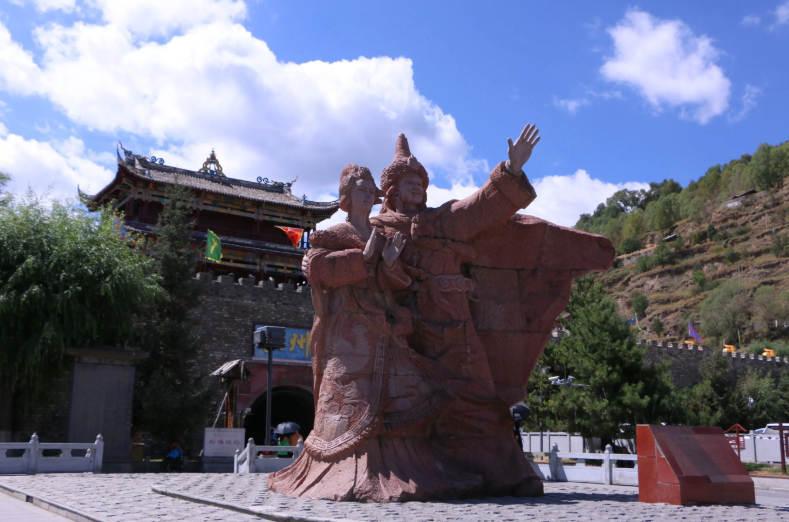
Songpan sits in the Aba Tibetan and Qiang Autonomous Prefecture of Sichuan Province. It is a distinctive highland county in northwestern Sichuan. Here you will find Songzhou Ancient Town, which preserves memories of history, as well as natural scenic spots including Huanglong Scenic and Historic Interest Area and Mounigou Valley. It is also a regular stop for travellers heading to Jiuzhaigou, the Zoige Grassland and other destinations.
What I find most special about Songpan is how it blends natural scenery, the history of an ancient frontier town, and the diverse cultures of the Tibetan, Qiang, Hui and Han ethnic groups. You can walk the ancient city walls and traditional streets dating back to the Ming Dynasty, or head out to alpine forests, travertine waterfalls and colourful ponds, for a travel experience completely different from that of the Chengdu plain.
If it is your first time visiting Songpan, you may have several questions: Where exactly is Songpan? What is the difference between Songpan County and Songpan Ancient Town? How do I get there from Chengdu? Apart from Huanglong, what other attractions are worth seeing?
Below I will introduce Songpan’s location, top sights, transport, best travel seasons and itinerary planning from a practical trip-planning perspective.
1. Where is Songpan?
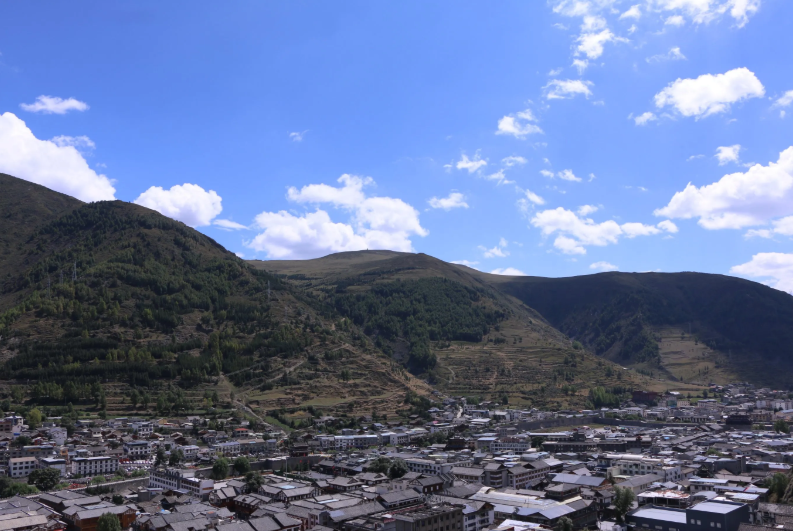
Songpan is located in northwestern Sichuan, within the Aba Tibetan and Qiang Autonomous Prefecture, on the eastern edge of the Qinghai-Tibet Plateau and the transitional zone to the northwestern Sichuan Basin.
Songpan County borders Jiuzhaigou County, Zoige County, Hongyuan County, Mao County and Pingwu County. It serves as an important transport and tourism hub in northwestern Sichuan.
Geographically, it is quite far from Chengdu, but relatively close to well-known tourist destinations such as Jiuzhaigou and Huanglong. For this reason, many travellers include Songpan on their itineraries for Jiuzhaigou and Huanglong.
The county seat of Songpan sits at an elevation of around 2,850 metres, a high-altitude area. Its climate, vegetation and townscape differ greatly from the Chengdu plain. Even in summer, mornings and evenings can be cool.
Basic facts about Songpan
Chinese name: Songpan County English name: Songpan County Province: Sichuan Province Autonomous Prefecture: Aba Tibetan and Qiang Autonomous Prefecture County seat: Jin’an Town Elevation of county seat: approx. 2,850 m Major attractions: Songzhou Ancient Town, Huanglong Scenic Area, Mounigou Valley, Chuanzhusi Key highlights: ancient town history, highland natural scenery, multi-ethnic culture, red revolutionary heritage
On Google Maps, search for “Songpan China” or “Songpan County” to view its location in Sichuan.
A note: Songpan refers to the whole county, while Songpan Ancient Town or Songzhou Ancient City means the old town area within the county seat. Huanglong, Mounigou and Chuanzhusi also fall within Songpan County, but they are not inside the ancient town itself.
2. What attractions are worth visiting in Songpan?
For first-time visitors to Songpan, I would prioritise Songzhou Ancient Town, Huanglong and Mounigou.
These three showcase different sides of Songpan: the ancient town for history, Huanglong for travertine ponds and landforms, and Mounigou for forests, waterfalls and alpine lakes.
2.1 Songzhou Ancient Town
Songzhou Ancient Town is the most iconic historical and cultural attraction in Songpan, and in my opinion the must-see spot for first-time visitors.
It lies in Jin’an Town, Songpan County. Historically, it was a vital military stronghold and market town for the ancient tea-horse trade. Standing on the transport corridor connecting Sichuan to the Qinghai-Tibet Plateau, it was for centuries a meeting point for different ethnic groups, merchants and travellers.
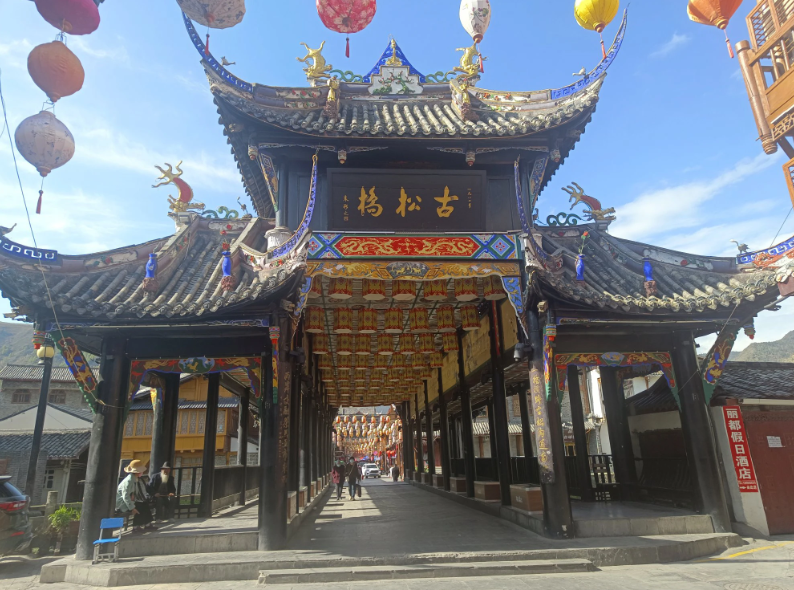
Today the ancient town still features distinctive city gates, city walls, old streets and historic buildings.
When exploring the town, I suggest starting near the city gate and wandering slowly along the old streets. Unlike the commercialised Kuanzhai Alleys in Chengdu, it retains the authentic feel of a traditional highland frontier town.
Key spots inside and nearby:
- City gates: distinctive traditional defensive landmarks, the most recognisable symbols of the ancient town
- Ancient city walls: offer insight into the town’s former military defence role
- Old streets: lined with restaurants, shops and local residents’ homes
- Minjiang River waterfront: the river runs beside the town, offering different views of the ancient architecture
- Traditional religious buildings: around the old town, you can find structures left by different faiths and cultural groups
If your schedule allows, I recommend staying one night near the ancient town. Explore the gates and streets by day, then experience the quiet rhythm of this highland small town after dark.
2.2 Huanglong Scenic and Historic Interest Area
Huanglong is the most famous natural attraction within Songpan County, and the main reason many tourists travel to this region.
It is renowned for its large-scale travertine formations, with its signature tiered coloured ponds.
What first drew me to Huanglong were these natural pools in shifting shades of yellow, green, blue and turquoise, coloured by mineral deposits in the water and changing light.
Main sights at Huanglong:
- Five-Coloured Pond: one of Huanglong’s most famous sites, with a dense cluster of vivid travertine ponds
- Golden Sand Pavement: a vast stretch of travertine creating a unique landform
- Welcome Ponds: a representative group of ponds near the park entrance
- Flowing Water and Glistening Waterfalls: formed by travertine and running water
- Huanglong Ancient Temple: a historic cultural site in the higher elevation zone
- Snow-capped mountains and primeval forest: forming the unique highland natural backdrop of Huanglong
Parts of Huanglong sit above 3,500 metres. If you normally live at low altitude, avoid strenuous exercise immediately upon arrival.
I recommend allocating a full day for Huanglong, taking your time to explore instead of rushing through the visit.
2.3 Mounigou Valley
If you love forests, waterfalls and alpine lakes, Mounigou Valley is another worthwhile destination in Songpan.
Unlike Huanglong, which is famous mainly for coloured travertine ponds, Mounigou offers a richer mix of scenery: forests, lakes, waterfalls, hot springs and travertine formations.
Mounigou has two main zones:
- Zhaga Waterfall: the landmark natural sight of Mounigou. Water cascades down layered travertine formations, surrounded by forests and valleys to create a spectacular highland waterfall scene.
- Erhai Lake (Erhai): known for alpine lakes and woodland scenery. The lakes sit among mountains and trees with clear water in a quieter setting. If you want more than just waterfalls and prefer forested highland lakes, add Erhai to your plan.
Note that the opening status and transport arrangements for different parts of Mounigou may change. Confirm the open zones and road conditions before your trip.
2.4 Chuanzhusi
Chuanzhusi lies in southern Songpan County. It is a frequent transport hub for journeys toward Huanglong, Jiuzhaigou and Zoige.
Besides serving as an accommodation and transit base, it also has its own historical and cultural appeal.
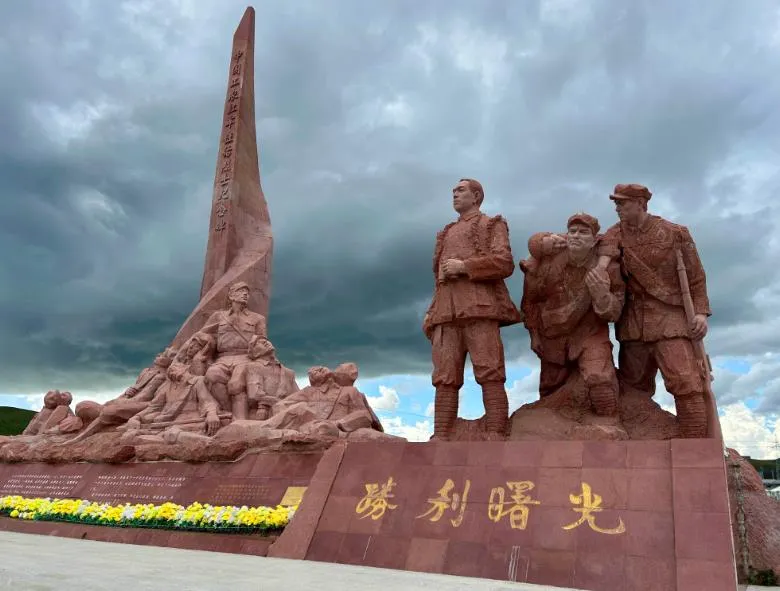
Near Chuanzhusi stands the Monument Park for the Long March of the Red Army, an important site for learning about the Long March history.
If you are interested in modern Chinese history, you can plan a stop here while passing through Chuanzhusi.
The surrounding highland grasslands, snow peaks and open valleys also offer fine views. On clear days, you can see the characteristic scenery of northwestern Sichuan’s plateau along the road.
2.5 Monument Park for the Long March of the Red Army
Songpan is not only home to an ancient frontier history; it also has close links with the Long March of the Red Army.
The Monument Park for the Long March of the Red Army is located near Chuanzhusi, built to commemorate this chapter of history.
The monument and associated sculptures carry strong red cultural themes. The open surroundings help visitors understand the legacy left by the Red Army in northwestern Sichuan.
If your trip covers more than natural scenery and you wish to learn about the history and culture of Aba, this site is worth visiting.
3. Why visit Songpan? What unique cultures can you find here?
Many travellers treat Songpan merely as a transit stop on the way to Jiuzhaigou and Huanglong, but I think it is well worth a longer stay if you have time.
Historically, it was a key corridor connecting inland Sichuan with the Qinghai-Tibet Plateau and a long-standing centre for trade and cultural exchange between ethnic groups.
3.1 The Ancient Tea-Horse Road and old trade
Songpan was an important military and commercial market in northwestern Sichuan.
Especially during the Ming Dynasty, the Songzhou area was a major node for the tea-horse trade. Tea, daily goods and other products from inland Sichuan flowed toward the highlands, while horses and other highland goods entered Sichuan through trade.
Centuries of this exchange shaped a multi-ethnic living culture in Songpan.
Walking through Songzhou Ancient Town today, you can still see traces of its past as a strategic transport stronghold in its city walls, gates and old streets.
3.2 Multi-ethnic culture
Songpan is a multi-ethnic settlement, with Tibetan, Qiang, Hui and Han communities living side by side.
Different groups have their own distinctive architecture, food, faiths and customs.
For example, you can find traces of Tibetan traditions, Qiang architectural and folk elements, and Hui food culture around the ancient town.
I suggest looking beyond the scenic spots: observe daily life in local restaurants, markets and streets.
If you want to photograph local residents, ask for permission first. Respect local rules when entering religious sites.
3.3 Highland pastoral life
Parts of Songpan have wide highland grasslands and pastoral areas.
On routes toward Chuanzhusi, Huanglong or Zoige, you can see grasslands, cattle, sheep and highland villages.
This landscape is very different from the cities of the Chengdu plain, and is one of the draws of travelling in Songpan.
If you enjoy photography, include these roadside highland views in your plans instead of only taking photos inside official scenic areas.
4. How to get to Songpan from Chengdu?
From Chengdu, the main options are high-speed rail, long-distance coach and self-driving.
Since the opening of the Chengdu-Qinghai Railway, travel from Chengdu toward Songpan, Jiuzhaigou and Huanglong has become much easier. For first-time visitors, I recommend rail transport as a priority.
4.1 High-speed train
For travel from Chengdu toward Songpan and surrounding tourist areas, check services on the Chengdu-Qinghai Railway.
An important note: the Huanglong-Jiuzhai Railway Station often referenced in tourism itineraries sits in Chuanzhusi Town, Songpan County. It is a key rail hub for Huanglong and Jiuzhaigou, but it is not right beside the entrance to Songzhou Ancient Town.
After arriving at Huanglong-Jiuzhai Station, you can take shuttle buses, tourist coaches or taxis to your final destination.
If you are heading for Songzhou Ancient Town, you will need separate transport from the station to the county seat.
Check the latest train schedules on the official 12306 platform. Foreign visitors can buy tickets using their passports.
4.2 Long-distance coach
If rail is not convenient, you can look for long-distance buses from Chengdu to Songpan.
Some bus stations in Chengdu run services toward Aba Prefecture and Songpan, but departure points, timetables and journey times must be confirmed for your travel date.
Trips through mountain roads generally take longer than city journeys, so allow plenty of buffer time if you take a bus.
4.3 Self-driving
Self-driving is a good choice if you prefer a flexible schedule.
From Chengdu, the usual route goes via Dujiangyan, Wenchuan and Mao County toward Songpan.
Along the way you can enjoy the scenery of the Minjiang River valley, mountains and highland terrain, and make a short stop at places such as Diexi Haizi Lake if your time permits.
That said, some mountain roads in northwestern Sichuan have sharp bends, rapid altitude changes and seasonal weather risks. Watch for rain and road conditions in summer, and snow, ice and temporary traffic controls in winter.
4.4 Getting to Songpan from Jiuzhaigou
If you have already visited Jiuzhaigou, you can continue onward to Songpan by road.
Travel time from Jiuzhaigou Scenic Area to Songzhou Ancient Town depends on your exact starting point and road conditions.
Options include tourist shuttles, taxis or pre-booked private cars.
I recommend grouping Jiuzhaigou, Huanglong and Songzhou Ancient Town into one continuous itinerary to avoid backtracking.
5. Best time to visit Songpan
Songpan is a highland region with distinct seasonal changes, and scenery and weather vary widely through the year.
For visits focusing on Huanglong, Mounigou and Songzhou Ancient Town, summer and autumn are generally best.
Spring: early highland scenery
Temperatures gradually rise in spring, but high elevations remain cold. Some mountain areas may still hold snow, and the temperature gap between day and night is large.
If travelling in spring, pack warm clothing and confirm the opening status of Huanglong and Mounigou ahead of time.
Summer: good for natural scenery
Summer is one of the better travel seasons for Songpan.
The highland vegetation is lush, grasslands and forests are vividly green, and the ponds at Huanglong and waterfalls at Mounigou are in good viewing condition.
However, summer is also the rainy season. Some mountain areas may see rainfall, slippery roads and temporary traffic restrictions.
Book accommodation and transport in advance if travelling in July and August.
Autumn: ideal for colourful forest photography
Autumn is my preferred season for Songpan travel.
As temperatures fall, mountain forests turn shades of yellow, red and orange. On clear days, Songzhou Ancient Town, the countryside around Chuanzhusi and highland valleys are excellent for photos.
September to October is the popular window for autumn foliage, though the exact viewing effect depends on temperatures and weather each year.
Winter: snow-capped highland scenery
Winter in Songpan is cold, and some mountain roads may have snow and ice.
You can consider visiting if you love snow and quiet highland winter scenery, but thorough preparation is essential.
Some high-altitude scenic spots such as Huanglong may adjust open zones or suspend certain services seasonally. Always check official announcements before departure.
6. Important travel tips for Songpan
The biggest thing to watch for in Songpan is altitude.
The county seat stands at roughly 2,850 m, while parts of Huanglong climb above 3,500 m. If you travel directly here from low-altitude cities such as Chengdu, your body will need time to adapt.
My recommendations:
- Avoid an over-packed itinerary. Skip intense physical activity right after arriving.
- Watch for altitude sickness. Stop activity and seek medical help promptly if you have severe headache, nausea, breathing difficulty or other serious discomfort.
- Bring warm layers: even in summer, mornings and evenings can be chilly.
- Keep track of weather: mountain weather shifts quickly, so check forecasts and road updates before you set out.
- Confirm scenic spot opening status: Huanglong, Mounigou and other sites may have seasonal adjustments.
- Pack sun protection: UV radiation is strong on the plateau, so bring sunscreen, sunglasses and a hat.
- Respect local culture: follow site rules in temples and religious venues, and do not photograph religious ceremonies without permission.
7. Sample itineraries for Songpan
For a first visit, I would not suggest rushing through the ancient town in only one hour. Attractions in Songpan County are spread out, so plan for two or three days if possible.
One-day Songpan trip
If you only have one day, focus on Songzhou Ancient Town.
Suggested plan: Morning: visit the ancient town gates, walls and traditional streets. Midday: try local specialities near the ancient town. Afternoon: continue exploring the old town surroundings and learning about local history and multi-ethnic culture. Evening: rest in the county seat before moving to your next destination.
This works well if you have already visited Huanglong and Jiuzhaigou earlier.
Two-day Songpan trip
With two days, combine Songzhou Ancient Town and Huanglong.
Day 1: Songzhou Ancient Town Arrive in Songpan in the morning. Explore Songzhou Ancient Town. Learn about the tea-horse trade and the history of this ancient frontier town. Stay overnight in Songpan or near Chuanzhusi.
Day 2: Huanglong Scenic Area Travel to Huanglong in the morning. Visit Welcome Ponds, Golden Sand Pavement, Five-Coloured Pond and other main sights. Adjust your route according to your fitness and the park’s opening arrangements. Head onward to your next destination in the late afternoon or evening.
This itinerary suits travellers wanting both ancient cultural heritage and famous natural scenery.
Three-day Songpan trip
For a fuller experience of Songpan, three days is ideal.
Day 1: Songzhou Ancient Town Explore the ancient walls, gates, old streets and nearby cultural buildings to learn about Songpan’s history.
Day 2: Huanglong Spend the whole day touring Huanglong, focusing on travertine ponds, waterfalls and alpine forests.
Day 3: Mounigou and Chuanzhusi Visit Zhaga Waterfall and Erhai Lake in Mounigou if open, then travel to Chuanzhusi to see the Monument Park for the Long March of the Red Army.
If you need to catch a train or depart on the same day, confirm timings well in advance and avoid packing distant attractions too tightly.
8. Nearby destinations worth visiting
Songpan sits in a special geographic position, close to many well-known Sichuan tourist spots. If you have extra time, you can continue to these places:
8.1 Jiuzhaigou
Jiuzhaigou is one of Sichuan’s most famous natural reserves, celebrated for alpine lakes, waterfalls, forests and autumn foliage.
Road transport connects Songpan to Jiuzhaigou, making them easy to combine on one northwestern Sichuan travel route.
For a first Sichuan trip, I think both Jiuzhaigou and Huanglong are worthwhile. Though both focus on natural scenery, their landscapes are very different.
8.2 Zoige Grassland
Zoige Grassland lies north of Aba Prefecture. It is a famous highland grassland and wetland area in Sichuan, with wide meadows, wetlands and river scenery that peaks in summer.
If you enjoy nature photography and highland road trips, you can travel north from Songpan toward Zoige.
8.3 Diexi Haizi Lake
Diexi Haizi Lake sits near Diexi Town in Mao County. It is a representative alpine lake on the upper Minjiang River, with the lake framed by surrounding mountains.
If you are driving from Chengdu to Songpan, you can schedule a short stop here depending on your route.
8.4 Dujiangyan
Dujiangyan, in the western Chengdu plain, is the famous ancient irrigation project and a UNESCO World Heritage Site.
You can plan a half-day or full-day stop in Dujiangyan if you are departing from Chengdu for Songpan.
Still, it is a considerable distance from Songpan, so I suggest arranging it according to your whole trip timeline rather than forcing it into the same tight segment.
9. Frequently asked questions about Songpan travel
9.1 Where is Songpan in China?
Songpan is in Aba Tibetan and Qiang Autonomous Prefecture, Sichuan Province, a highland county in northwestern Sichuan, close to famous destinations such as Jiuzhaigou and Huanglong.
9.2 What is the difference between Songpan County and Songpan Ancient Town?
Songpan County refers to the whole large administrative area, covering many towns, townships and tourist zones.
Songpan Ancient Town generally means Songzhou Ancient City in Jin’an Town, the county seat and a key historical cultural attraction. Huanglong, Mounigou and Chuanzhusi belong to Songpan County but are not inside the ancient town.
9.3 Is Songpan worth visiting?
Yes, in my view.
If you enjoy ancient town history, highland nature and multi-ethnic culture, Songpan deserves a longer stop. It is more than just a transit hub for Jiuzhaigou and Huanglong; it has its own attractions including Songzhou Ancient Town, Mounigou and Chuanzhusi.
9.4 How far is Songpan from Jiuzhaigou?
Road transport connects Songpan county seat to Jiuzhaigou Scenic Area. Exact distance and driving time depend on your starting point and road conditions. Use navigation for your actual destination, and do not mix up the county seat with Huanglong-Jiuzhai Railway Station.
9.5 How far is Songpan from Huanglong?
There is a road distance between Songzhou Ancient Town and Huanglong Scenic Area, requiring a dedicated vehicle or tourist transport. Huanglong-Jiuzhai Railway Station in Chuanzhusi Town is comparatively closer to Huanglong.
9.6 What is the elevation of Songpan?
The county seat sits at around 2,850 m, while parts of Huanglong Scenic Area exceed 3,500 m. Elevation varies widely between attractions, so take care when travelling to higher zones.
9.7 Which month is best for Songpan?
For visits to Huanglong, Mounigou and Songzhou Ancient Town, I recommend June to October. Summer suits forests, waterfalls and highland grasslands, while autumn is best for colourful plateau foliage.
9.8 Does Songpan have a high-speed railway station?
Songpan County is served by rail. Visitors heading for Jiuzhaigou and Huanglong usually look for Huanglong-Jiuzhai Railway Station in Chuanzhusi Town. Check train timetables, station details and connecting transport for your travel date.
9.9 Is it a good idea to stay overnight in Songpan?
Yes. If you only want a quick look at the ancient town, half a day may suffice. If you also plan to visit Huanglong, Mounigou and surrounding sights, I recommend staying for at least two nights to avoid long daily transfers.
9.10 What local food can you try in Songpan?
Songpan’s food blends Sichuan cuisine with multi-ethnic local flavours. On your trip, you can try yak meat, Tibetan-style noodles, beef and mutton soup, hand-served meat and local snacks. There are also Hui restaurants serving distinctive halal noodles.